Threats
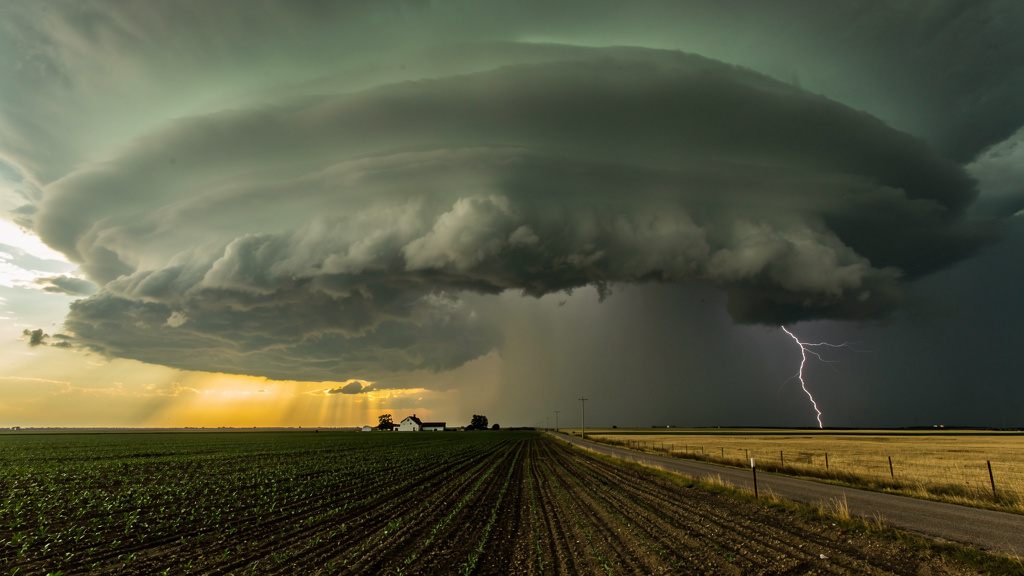
The most useful question in preparedness isn't "what's the worst thing that could happen?" It's "what's most likely to happen here, and am I ready for it?" Per FEMA Threat and Hazard Identification and Risk Assessment (THIRA) methodology, threats deserve attention in proportion to probability × impact for your specific location and household. A family in coastal Texas that spends all their effort preparing for an electromagnetic pulse (EMP) while ignoring hurricane season has their priorities inverted.
This Foundation organizes threats into four categories ranked by general probability: natural hazards (near-certain for most regions), infrastructure failures (likely, especially in aging grids), societal disruptions (moderate probability, high impact), and chemical, biological, radiological, and nuclear (CBRN) events (low probability, extreme impact). Your regional profile determines which specific threats within each category deserve the most preparation.
→ Read First 30 Days (15 min, applies to any threat) Threat planning · Grid-down · Cascading
When to seek professional help — threat-event thresholds
Active threat events require immediate professional response, not self-managed mitigation:
- Tornado warning issued for your location — move to safe room or smallest interior windowless room on lowest floor per NOAA/NWS guidance. Do not film. Do not photograph from windows. Average warning lead time is 13 minutes.
- Active wildfire within 5 miles (8 km) with wind toward you — evacuate immediately per CAL FIRE / state forestry agency guidance, do not wait for "leave when told." Wildfires move up to 14 mph (23 km/h) in grassland; structures that hold for 30 years burn in 30 minutes once ember-cast begins.
- CBRN event indicators — unexplained mass casualty, multiple people with same symptoms, visible chemical cloud, dosimeter alarm — call 911 + shelter-in-place + seal the room per CDC/EPA Emergency Response. Do not attempt rescue without trained PPE.
- Active shooter / civil unrest violence at your location — Run / Hide / Fight per DHS Active Shooter guidance, call 911 once safe. Do not engage uninvolved.
- Earthquake aftermath with structural damage — visible foundation cracks wider than ¼ in (6 mm), separation between walls and ceiling, smell of gas, broken water main — evacuate, do NOT enter to retrieve belongings per FEMA P-154 rapid visual screening guidance.
Educational content here assumes you are planning ahead of events. During an active emergency, follow official emergency-management instructions (NOAA NWS alerts, FEMA IPAWS, county EMS, broadcast media). Survipedia preparation builds the buffer; emergency responders manage the active event.
Where to start
Three audience-segmented entry paths for threat assessment:
If you're brand-new (haven't done threat assessment before):
- Read your county's Hazard Mitigation Plan — every US county has one, published online by emergency management. Lists historical events, recurrence probability, areas at risk. The single most useful document for calibrating your personal priorities.
- Complete the Threat Planning likelihood × severity matrix for your top 8–10 location-specific threats. Identify the 3 highest-cell threats — those are where your effort goes first.
- Run a 48-hour grid-down drill this month — kill the main breaker Friday evening, restore Sunday morning, document every gap. The drill reveals more about your readiness than any reading. See grid-down.
If you have basics covered (assessment done, basic plans written):
- Run cascading-disaster planning per cascading.md — second and third-order effects (flooding after earthquake, disease after flood, economic disruption after pandemic) are frequently worse than the initial event. Your existing plans likely address only the headline threat.
- Insurance audit: homeowner / renter coverage gaps are universal. Flood insurance is separate and often required by lender per NFIP. Earthquake, sewer-backup, owner-built-structure, and surplus-lines coverage are commonly missing. Review during a non-renewal period.
- 6-month reassessment calendar — threat profiles change (new flood-zone maps, new wildfire wildland-urban-interface boundaries, new utility-grid vulnerabilities). Set a recurring calendar event to revisit.
If you live off-grid or in a rural setting (>1 hour from emergency services):
- Read off-grid resilience for the cross-cutting hazards specific to homestead and rural-property contexts — wildfire defensible-space zones, flood freeboard, earthquake construction, long-haul grid-down beyond 90 days, livestock disease and crop failure, well failure modes, insurance gaps that standard residential policies don't cover.
- Coordinate with Community — mutual-aid networks, neighbor capabilities inventory, communications redundancy. Rural threat response depends on neighbor coordination more than urban response does.
- Plan for delayed external response — your bug-out plan, your medical evacuation plan, and your communications plan all need to assume professional help takes hours-to-days, not minutes.
Field note
Check your county emergency management website for a published hazard mitigation plan. Most counties in the US have one — it lists every historical disaster, the probability of recurrence, and the areas most at risk. It's the single most useful document for calibrating your personal threat priorities. The full text is usually 80–200 pages; the executive summary covers most of the value in 5–10 pages.
What this hub covers — and what it doesn't
This page routes to Survipedia threat-assessment content spanning routine natural hazards through low-probability extreme events. It covers:
- Natural hazards — hurricane, tornado, earthquake, wildfire, flood, winter storm, heat wave, drought, volcanic, landslide, tsunami
- Infrastructure failures — grid-down, EMP, cyber attack, supply chain, communications blackout
- Societal disruptions — economic, pandemic, civil unrest, cascading and compound disasters
- CBRN events — nuclear / fallout, chemical, biological, radiological
- Cross-cutting — threat planning methodology, off-grid resilience, post-disaster recovery
It deliberately does not cover: speculative geopolitical scenario planning (specific war-game outcomes), conspiracy-driven threat models without empirical recurrence evidence, urban tactical-operations training, or detailed intelligence-analysis methodology. The threats listed here are all documented in CDC, FEMA, NOAA, USGS, EPA, or DHS data — backed by quantifiable historical recurrence.
Natural hazards
These are the threats you will almost certainly face at some point, depending on your geography. The preparation they require overlaps heavily with every other Foundation — the household that has water, food, shelter hardening, energy backup, and a communication plan is already 80% prepared for any natural hazard.
- Winter storms — power loss + road blockage + frozen pipes; 2021 Texas ice storm left 4.5 million households without power per ERCOT post-event report; preparation centers on energy + shelter
- Hurricanes — 3–7 days warning; hard evacuation-timing decisions; mobility + evacuation routes determine smooth departure vs. gridlock
- Flooding — costliest annual natural disaster in US per FEMA NFIP claims data; coastal surge + inland river flooding; elevation + sump capacity + sandbag staging are structural
- Earthquakes — zero warning; structural damage + ruptured gas + broken water + fires within minutes; preparation is pre-event (secure heavy furniture, gas shutoff, bedside shoes + flashlight)
- Wildfires — up to 14 mph (23 km/h) in grassland; defensible space per NFPA 1144, evacuation trigger (leave when told, not when you see flames), pre-loaded vehicles
- Tornadoes — NWS average lead time 13 minutes; safe room or smallest interior windowless room lowest floor; FEMA P-320 above-ground safe-room standard
- Heat waves — deadliest US natural hazard by annual body count (500–700/yr per NOAA); passive cooling, hydration protocols, heatstroke recognition before progression
- Drought — slow-moving; agricultural + water-supply impacts; multi-year recovery; water storage + rainwater catchment
- Volcanic events — ash fall + lahars + pyroclastic flows per USGS Volcano Hazards Program; PNW + Hawaii + Alaska primary US risk zones
- Landslides, mudslides, avalanches — particular attention in post-wildfire burn-scar areas — saturated slopes that held for decades can fail within hours of heavy rain after vegetation lost
- Tsunamis — as little as 10–15 min warning for near-field sources (earthquake, submarine landslide, volcanic); coastal Pacific + Atlantic communities
Households on rural off-grid properties face a different threat profile than urban or suburban readers. Off-grid resilience covers the cross-cutting hazards specific to homestead contexts.
Infrastructure failures
Modern infrastructure is interdependent. The electrical grid powers water treatment, which enables sanitation, which keeps hospitals functional, which maintains public health. A failure in any node cascades.
- Grid-down event — 3–14 days most likely; energy Foundation directly addresses; extended (weeks to months) occurred in Puerto Rico post-Maria 2017 per DOE Office of Electricity reports
- EMP (electromagnetic pulse) — high-altitude nuclear detonation OR Carrington-class severe solar storm; low probability, civilization-altering impact; Faraday protection for critical electronics (radios, charge controllers, medical devices) is the primary mitigation per EMP Commission 2008 report
- Cyber attacks — 2021 Colonial Pipeline ransomware disrupted fuel supply across US Southeast for a week per DOE Cybersecurity report; preparation mirrors grid-down — energy independence + stored water + fuel reserves
- Supply chain disruptions — pandemic, labor action, geopolitical conflict, cascading infrastructure failure; shelves empty within 72 hours per FMI supply-chain data; food storage + water reserves buffer the gap
- Communications blackout — solar storms, undersea cable cuts, cascading grid failure; eliminates news feeds + alerts most people rely on; Community comms-plan + radio capability
Societal disruptions
- Economic disruption — hyperinflation, bank failures, prolonged unemployment, currency instability; erodes purchasing power over weeks to months; stored food + energy independence + barter capability reduce cash-flow dependency
- Pandemics — sustained isolation, supply discipline, medical preparedness including PPE, sanitation, quarantine; 2020 demonstrated supply chains + healthcare + social structures all strain simultaneously
- Civil unrest — localized protests to sustained instability; Security awareness, OPSEC, grey man principle — moving through disrupted areas without drawing attention
- Cascading and compound disasters — conceptual key to this Foundation — second and third-order effects (flood after earthquake, disease after flood, economic after pandemic) are frequently worse than the initial event
CBRN events
Chemical, biological, radiological, and nuclear events are low-probability but high-consequence per DHS CBRN risk-assessment doctrine.
- Nuclear — fallout patterns, shelter-in-place duration (48 hr minimum for initial decay per FEMA radiological-emergency guidance), decontamination procedures per CDC
- Chemical — PPE selection by threat agent, evacuation timing, contamination avoidance; EPA Emergency Response coordinates incidents
- Biological — outbreak recognition, isolation protocols, PPE per CDC IDSA guidance; cross-references pandemic preparation
Probability is not zero
The low-probability events in this section have all occurred within living memory somewhere in the world. Nuclear accidents (Chernobyl 1986, Fukushima 2011), chemical spills (Bhopal 1984, East Palestine 2023), and biological outbreaks (COVID-19 2020, Ebola 2014) are not science fiction. Prepare for the likely first, but don't ignore the severe.
Common questions
Should I focus on natural disasters or societal disruption? Both — but in proportion to your location's historical recurrence per FEMA THIRA. For most US households, natural hazards (hurricane / tornado / wildfire / winter storm depending on region) dominate; supply-chain and grid-down disruptions cross-cut almost all regions. CBRN preparation is a thin layer added once the high-probability threats are handled.
Is "prepping" pessimistic? Doesn't focusing on threats create anxiety? Per behavioral research on disaster preparedness (cited in FEMA's PrepareAthon evaluation), the opposite is true at sufficient depth — partial preparation creates ongoing anxiety because the gap is visible; thorough preparation extinguishes anxiety because the response is known. The calibration is in the threat ranking — preparing for the next hurricane is rational; preparing for civilizational collapse is paralyzing.
What if my budget only allows one focus area? Energy backup + 2-week water + 2-week food + first-aid kit + a documented response plan for your top regional threat. This handles 90%+ of probability-weighted disaster scenarios. Add specialized hardening (storm shutters, defensible space, septic backup) only after the basics are covered.
Do I need a bug-out plan? Depends on threat profile. Hurricane-zone households need evacuation routing because shelter-in-place is sometimes unsafe. Wildfire-zone households need pre-loaded vehicles because evacuation windows are sometimes <30 minutes. Apartment dwellers in low-disaster regions may not need bug-out — most of their threats are shelter-in-place. See Mobility for the decision framework.
Your single next step: complete the Threat Planning likelihood × severity matrix for your specific location — it produces a ranked top-3 list that drives every subsequent preparedness decision across the other 11 Foundations.