Security
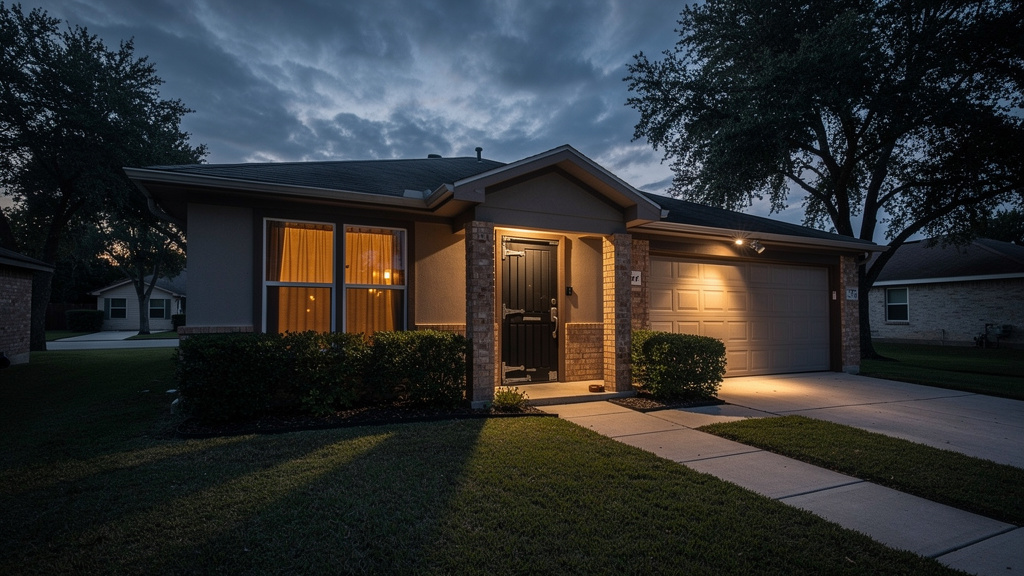
During Hurricane Katrina, looting began within 24 hours per FEMA After-Action Report. After the 2021 Texas grid failure, reports of home break-ins spiked as desperate people searched for warmth and water. The pattern repeats in every extended emergency: when normal systems of order are stressed beyond capacity, personal security shifts from the government's responsibility to yours.
Security is a layered system, not a single solution. Each layer reduces the probability that you'll need the next one. Awareness prevents you from walking into problems. Deterrence makes you an unattractive target. Hardening makes your home difficult to breach. Detection tells you when something's wrong. Response is the last resort when every other layer has failed.
→ Read First 30 Days (security chapter, 15 min) Hardening · OPSEC · Documentation
When to call professional response — escalation thresholds
Security situations escalate quickly. Use-of-force law varies by state, but these conditions universally require immediate professional response rather than self-managed escalation:
- Active intrusion in progress while you are home — call 911, retreat to a defensible position (safe room or upper floor), announce your presence loudly ("Police are coming, I am armed"), let the intruder leave if possible. Confrontation per DOJ NIJ research substantially increases injury rates for both parties vs. retreat + report.
- Armed standoff or hostage situation — call 911 immediately, comply with intruder's stated demands, do not negotiate independently. Trained crisis negotiators have outcomes you cannot replicate alone.
- Domestic-violence escalation — National Domestic Violence Hotline 1-800-799-7233, or text START to 88788. Local shelters are confidential and have safe-haven protocols.
- Stalking or repeated targeting — document every incident with date/time/details, file a police report (even if no crime has yet occurred), consider a restraining order. Per National Center for Victims of Crime, pattern documentation is essential for legal protection.
- Cyber attack with active financial loss — call your bank immediately, freeze affected accounts, file a report at IC3.gov (FBI Internet Crime Complaint Center), change passwords on a clean device.
Use-of-force law varies dramatically by state. Castle Doctrine, Stand-Your-Ground, and Duty-to-Retreat statutes differ across jurisdictions per USCCA legal map. Read self-defense law before assembling any defensive capability. Booby traps, concealed hazards, and devices intended to injure intruders are illegal in virtually every US jurisdiction even on your own property.
Where to start
Three audience-segmented entry paths matching common starting positions:
If you're brand-new (apartment / suburban, no prior security focus):
- Replace strike-plate and hinge screws on your front door with 3-inch (76 mm) screws — $5 + 15 minutes converts a kick-in-one-hit door to one that resists sustained force. Single highest-return security upgrade per FBI / DOJ data on residential entry.
- Install one motion-activated solar LED floodlight on the most exposed side of your home — eliminates the darkness opportunists rely on per CPTED (Crime Prevention Through Environmental Design) principles.
- Establish a family rally point (one inside the home — typically a safe room, one outside — a specific intersection or neighbor's house) and brief every household member age 8+.
If you have basics covered (door + lighting done, ready to deepen):
- Run an OPSEC self-assessment — what does someone walking past your house see about your preparedness? What does your social media reveal? Per opsec, most preparedness disclosure is unintentional.
- Build out documentation preservation — 4-layer system (cloud + fire-safe + off-site + bug-out copy) for birth certificates, insurance, vehicle titles, account records.
- Choose your response capability thoughtfully — firearms require ongoing training, secure storage per state requirements, and use-of-force legal knowledge. Non-lethal options (pepper spray, conducted-energy device) fit households that don't keep firearms.
If you live on rural off-grid property (long driveways, large perimeters, delayed police response):
- Read rural homestead security — driveway detection systems, game cameras as perimeter alerts, gate configurations, livestock predator deterrence.
- Build out community coordination — neighbor mutual-watch networks compensate for police response time. Cross-Foundation: pairs with Community and Mobility for evacuation routing.
- Consider dogs — 24/7 detection, no electricity required, immune to electronic countermeasures. Livestock guardian breeds alert differently than trained protection dogs; choose the role.
Field note
Walk your property at night with the lights on inside and the exterior dark. Look at your home from the street, from the alley, from each neighbor's vantage point. What can someone see? Open food stores, visible electronics, uncovered windows into bedrooms? That ten-minute exercise shows you exactly what your OPSEC profile looks like to an outsider. It costs nothing, takes ten minutes once per season, and routinely reveals fixes that no checklist would surface.
What this hub covers — and what it doesn't
This page routes to Survipedia security content spanning awareness through legal response. It covers:
- Awareness — situational awareness (Cooper's color code), OPSEC, threat assessment
- Deterrence and hardening — perimeter lighting, door + window reinforcement, fencing
- Detection — cameras, alarms, night vision, dogs, rural-property detection
- Response — communication plans, firearms (selection + storage + training), non-lethal options, self-defense training, digital security, documentation
- Legal and travel — self-defense law by state, travel security, displacement security
It deliberately does not cover: vigilante or extra-legal actions, tactical training beyond personal defense (military / law-enforcement-grade), private-investigation methodology, lethal-force escalation beyond legal use-of-force limits, or specific brand/model firearms recommendations (regulation and product availability changes too fast). The A8 "when to seek professional help" threshold applies partially — defensive escalation thresholds are documented in the danger admonition above; daily security hygiene is reader-managed.
Awareness
- Situational awareness — Cooper's color code (White / Yellow / Orange / Red); training yourself to default to Yellow during routine activity costs nothing and gives seconds of lead time
- OPSEC — operational security per US DOD OPSEC Doctrine 5-step process; controlling what information leaks via social media, conversations, visibility from street
- Threat assessment — probability × impact × vulnerability matrix; converts vague unease into ranked priorities; cross-references Threats Foundation threat-planning matrix
Deterrence and hardening
Most opportunistic crime targets the easiest victim per FBI UCR data. Hardening shifts your risk profile by raising the cost of intrusion.
- Perimeter lighting and fencing — motion-activated lights covering all four sides; solar LED floodlights $30–$80 each are the inexpensive change with the largest risk-profile shift per CPTED research
- Door reinforcement — highest-return hardening step; replace 3/4-inch strike-plate screws with 3-inch (76 mm) wood screws anchoring into wall stud per UL 437 / ASTM F476 force-entry testing
- Window security — security film (3M Safety/Security Film 8 mil or equivalent) holds shattered glass in place; ground-floor window bars + shutters for higher-risk areas
Hardening has legal limits
Booby traps, concealed hazards, and devices intended to injure intruders are illegal in virtually every US jurisdiction, even on your own property per state criminal codes and tort law. Hardening is about barriers and delays — making entry difficult and noisy — not about causing harm to uninvited visitors. Know the self-defense laws in your state before installing any reactive defense.
Detection
- Camera systems — real-time awareness + post-event evidence; basic 4-camera NVR setup ~$300–$600 USD; solar-powered cameras add off-grid resilience
- Alarms and early warning — layered sensor design: door + window contacts, motion detectors, glass-break, backup sirens operating during power outage; interrupt before incident, not respond after
- Night-vision equipment — Generation 1 monoculars $200–$400 entry; Gen 2 / digital $800–$2,500; thermal imaging $2,500+ for rural large-perimeter
- Rural homestead security — driveway detection, game cameras as perimeter alerts, gate configurations, livestock predator deterrence; mutual-watch networks compensate for police response time
- Dogs — 24/7 detection requiring no electricity, immune to electronic countermeasures; livestock guardian breeds alert differently than trained protection dogs
Response
Response is the layer you hope never activates. It starts with communication and coordination, not weapons.
- Communication plan — household + neighborhood watch group coordination; rally points inside (safe room) and outside (neighbor / intersection) pre-established and practiced
- Safe room — interior windowless room with reinforced door + bunker-grade lock + backup communications + first-aid + water; mass-shooter or home-invasion shelter
- Firearms — selection, secure storage per state law (NRA-recommended quick-access biometric safe for nightstand, full safe for primary), legal requirements, training emphasis (hardware without practice is unreliable under stress)
- Self-defense training — martial arts, firearms drills, stress-inoculation exercises that close the gap between owning a tool and being able to use it; minimum 1 trip to the range per quarter to maintain perishable skill
- Non-lethal options — pepper spray (OC at 2-million SHU, 10–15 ft (3–4.5 m) range), conducted-energy devices, personal alarms; response capability for households that don't keep firearms or escalation step before lethal force
- Digital security — strong unique passwords + hardware MFA per NIST SP 800-63B, encrypted backups, offline copies of critical documents
- Privacy practices — reduces attack surface in both digital and physical domains; doxxing prevention, address-shielding, financial-privacy practices
- Documentation preservation — 4-layer system (cloud + fire-safe + off-site + bug-out) for birth certificates, insurance policies, vehicle titles, account records against fire, flood, theft, evacuation, spouse death
- Travel security and displacement security — maintaining security posture in hotels, shelters, relatives' homes, vehicles — environments where you can't rely on your own hardware
- Vehicle survival — vehicle as escape, cover, and evasion tool; two-car-length rule, engine block cover positioning, Smith System defensive driving, vehicle attack pattern recognition, and post-incident protocols
- Self-defense law — use-of-force framework that governs every response layer; Castle Doctrine + Stand-Your-Ground + Duty-to-Retreat variation across US states per USCCA legal map; READ BEFORE assembling any defensive capability
Common questions
Do I need a firearm for home defense? Depends entirely on training willingness and household composition. A firearm without ongoing practice is unreliable under stress and adds risk to children + curious adults. Households unwilling to commit to quarterly range time + monthly dry-fire practice + secure storage discipline are typically safer with non-lethal alternatives (pepper spray + alarms + hardening). Households that commit to the training gain a defensive option but inherit the responsibility per Centers for Disease Control firearm injury research.
Should I get a German Shepherd or doorbell camera first? Doorbell camera. A camera + a strike-plate screw upgrade + motion lighting shifts your risk profile more than any single dog for less than 5% of the lifetime cost. Get the dog because you want a dog. Get the camera because it deters crime.
What is the "grey man" concept and is it paranoid? Grey man means moving through public spaces without drawing attention — no tactical-branded clothing, no visible expensive electronics, no displays of capability or wealth. It is not paranoid; it is the standard practice of every personal-protection professional and most experienced travelers. The principle: do not become a memorable target. It costs nothing to wear unbranded clothes and keep your phone in your pocket.
Is online-shopping data really a security risk? Yes per FTC consumer-protection reports. Most identity theft begins with data aggregated from breached retail accounts, then sold on darknet markets, then used to open credit lines or take over financial accounts. Use unique passwords per account (password manager), hardware MFA per NIST SP 800-63B, freeze your credit at all three bureaus when not actively applying for credit.
Your single next step: complete the First 30 Days security chapter — it sequences strike-plate hardening, OPSEC self-assessment, and rally-point establishment into a 30-day plan that builds on this hub's five-layer framework.