Getting Started
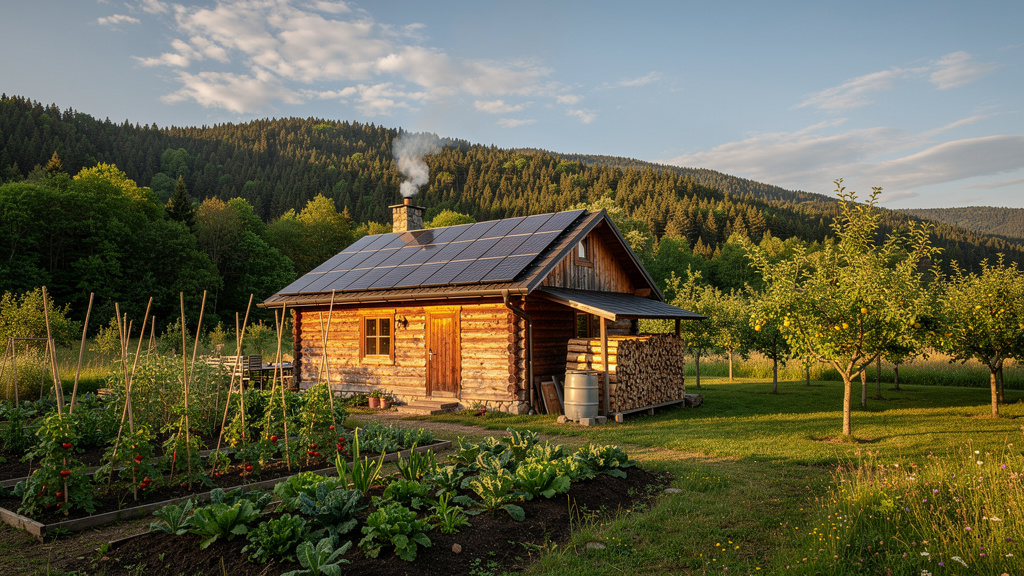
Survipedia is a free encyclopedia of practical self-reliance — organized into 12 Foundations that cover three interconnected domains. Explore everything, or focus on the path that matches where you are right now:
Crisis Survival — Field medicine, threat response, wilderness skills, and the mental toughness to make good decisions when everything goes sideways. The knowledge that keeps you alive when the situation is already bad.
Smart Prepping — Emergency storage, disaster planning, stockpiling, and supply independence. The systems and supplies that mean you're never starting from zero — whether it's a power outage or something worse.
Off-Grid Living — Permanent water and energy systems, year-round food production, owner-built shelter, and homestead economics. The complete playbook for building a life that doesn't depend on the grid.
Most people start with one of these and end up needing all three. The homesteader who never thought about emergency medicine and the urban prepper who's ready to buy land have more in common than they think. This site connects the full picture.
Where do I start?
Self-reliance isn't a purchase — it's a practice. Small steps, taken consistently, build real capability. Pick the path that fits where you are right now.
The 3-step onramp
- Assess: Which of the 12 Foundations is your weakest right now? That's your starting point.
- Read the overview: Every Foundation has an index page that gives you the full picture in 5 minutes.
- Do one thing today: Each page ends with a checklist. Pick the first item and do it before bed.
Start here — this week:
- Day 1–2: Read Water and store 1 gallon (3.8 liters) per person for 3 days
- Day 3–4: Read Food and check what's already in your pantry — you probably have more than you think
- Day 5–6: Read Medical and inventory your first aid supplies
- Day 7: Read the First 30 Days guide to connect it all
You now have the basics of the three Foundations that matter most in the first 72 hours of any disruption.
Expand from supplies to systems:
- Build Energy independence — even a small solar setup changes everything during an outage
- Strengthen your Security posture — start with the door strike plate upgrade (15 minutes, changes your risk profile)
- Start building Community — introduce yourself to 5 neighbors and swap phone numbers
- Read the Threats most likely in your region and pressure-test your plan against them
Push into the force multipliers:
- Build Skills that outlast gear — fire, navigation, knots, and repair
- Harden your Mindset — stress inoculation, decision frameworks, and group morale
- Develop your Mobility plan — know how to move if staying isn't safe
- Stress-test everything with a "grid-down weekend" — kill the breaker and live on your preps for 48 hours
You're past "what if" and into "how do I." Start with the infrastructure decisions that everything else depends on:
- Land & water: Read Water with an eye toward permanent sources — rainwater, wells, and springs
- Energy: Study Off-Grid Solar and think whole-system — your load calculation drives everything
- Food production: Read Gardening, Permaculture, and Food Preservation — growing is the easy part; preserving the harvest is the real skill
- Shelter: Explore your building options — from hardening an existing structure to earthbag, cob, and timber construction
Every Foundation has content for permanent, self-sufficient systems — not just emergency use.
The 12 Foundations
Self-reliance isn't one skill — it's a system. Remove any piece and the whole thing has a gap. The 12 Foundations are organized into three tiers that follow a natural learning path: secure the essentials first, build the infrastructure that sustains them, then develop the capabilities that multiply everything.
Tier 1 — Essentials
What you need in the first 72 hours — and the permanent systems that replace the temporary ones.
-
Source it, purify it, store it. From apartment bathtub reserves to rainwater cisterns, gravity-fed systems, and hand-dug wells.
-
Pantry stacking, canning, dehydrating, gardening, foraging, livestock, and the math of feeding yourself year-round from what you grow.
-
First aid to trauma care to pandemic protocols. Build kits, learn skills, stockpile what you'll need when professional help isn't available.
-
Emergency tarps to reinforced safe rooms to owner-built homes. Harden where you live, know how to shelter anywhere, and build from the ground up.
Tier 2 — Infrastructure
What you need from day 4 onward. The systems that keep everything running — whether for a week or a lifetime.
-
Solar, generators, batteries, wood heat, and fuel storage. From a backup panel to a whole-home off-grid system.
-
Awareness, OPSEC, perimeter hardening, and defense. Layered protection from observation to last resort — urban, suburban, and rural.
-
Mutual aid, HAM radio, mesh networks, barter systems, and the economics of building a life from what your land provides.
-
Natural disasters, grid failure, economic collapse, pandemics, and CBRN events. Know what you're preparing for so you can stop preparing for everything.
Tier 3 — Fieldcraft
The capabilities that make everything else work better.
-
Fire, navigation, knots, carpentry, and repair. Gear breaks and supplies run out — skills are permanent.
-
Knives, axes, multitools, bags, and kits. What to own, how to maintain it, and what to carry daily.
-
Vehicles, evacuation routes, fuel, bicycles, boats, and rucking on foot. Your Plan B when staying isn't safe.
-
Resilience, stress management, decision-making under pressure, and group morale. The most critical survival tool weighs three pounds.
Field guides
Deep-dive guides that cross all 12 Foundations. Each one is a standalone playbook for a specific scenario — designed to be read cover to cover, printed, or kept in your go-bag.
-
Field medicine and first aid decisions when professional care is hours or days away.
-
Recipes for grid-down cooking — from pantry one-pot meals to campfire comfort food and historical survival rations.
-
Building self-reliance from a quarter-acre to a working farm — water, food, energy, and security systems designed to last.
What makes Survipedia different
Three domains, one system. Whether you're learning field medicine, building a 72-hour kit, or designing a fully off-grid homestead, the same 12 Foundations apply. Crisis Survival, Smart Prepping, and Off-Grid Living connect into one coherent framework instead of three separate worlds.
Practical, not theoretical. Every guide ends with a checklist. Every checklist item is completable without further research. If you can't act on it today, it doesn't belong here.
All settings, all budgets. Urban apartment. Suburban home. Rural homestead. Remote off-grid property. Every guide covers multiple scenarios — not just the 40-acre fantasy. Self-reliance works on any budget and any footprint.
Politically neutral. Preparedness is a practical discipline, not a political identity. We don't care why you're here — natural disasters, infrastructure fragility, economic uncertainty, climate resilience, or just wanting to depend less on systems you can't control. The skills are the same regardless of your motivation.
No fear, no hype. Calm, practical, empowering. We don't sell panic. The world has real risks. This site gives you real tools to manage them, explained by someone who respects your intelligence and wants you to succeed.
Continuously improved. This isn't a static blog. Content is reviewed, updated, and expanded as practices evolve and readers contribute feedback.
Start now
Pick the Foundation that feels most urgent, read the overview, and do the first checklist item tonight. Self-reliance compounds — every small step makes the next one easier.
-
The universal starting point. Stored water is the single highest-return prep action you can take today.
-
Build your pantry. Then learn to grow, preserve, and produce — the shelf-stable kitchen is just the beginning.
-
Inventory what you have. The gap between "nothing" and "basic first aid kit" is one afternoon.
-
The single most useful document on this site for someone starting from zero.