Shelter
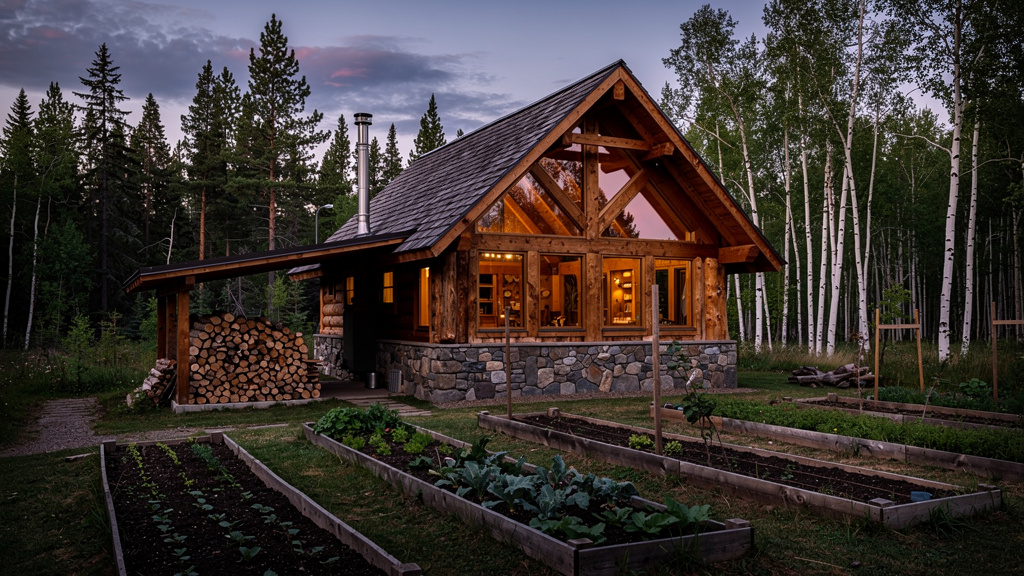
Exposure kills more people in outdoor emergencies than starvation, dehydration, or injury per Wilderness Medical Society survival statistics. In urban emergencies, the threat is subtler but equally real: a home that can't stay above 50°F (10°C) during a winter power outage becomes medically dangerous within 24–48 hours per CDC hypothermia guidance, especially for infants (room target ≥65°F (18°C) per AAP), elderly, and anyone on medications that require stable body temperature.
Shelter preparedness spans three scales: emergency (surviving tonight with what's available), hardening (making your current home resilient to outages and regional threats), and building (constructing permanent structures that don't depend on the grid at all).
→ Read First 30 Days (shelter chapter, 15 min) Tarp · Warm room · Storm prep
When to seek professional help — shelter-related thresholds
Shelter and structural failures carry life-safety risk that requires immediate response — 911, fire department, structural engineer, or evacuation:
- Symptoms of hypothermia beyond mild shivering — confusion, slurred speech, drowsiness, poor coordination, paradoxical undressing (Stage HT II–IV per Swiss staging). Per WMS: stop shivering does NOT mean warmed up — it means reserves exhausted. Initiate active rewarming and seek emergency care.
- Suspected carbon monoxide poisoning from indoor combustion (wood stove, propane heater, generator in attached garage) — headache, dizziness, nausea, confusion. Evacuate to fresh air, call 911 per CDC. Install battery-backed CO alarms rated UL 2034 on every floor.
- Structural failure indicators after earthquake / flood / fire — visible foundation cracks wider than ¼ in (6 mm), separation between walls and ceiling, doors/windows that won't close, smell of gas. Evacuate and call structural engineer or fire department per FEMA P-154 rapid visual screening.
- Active fire in a chimney, wall cavity, or attic — kill any combustion source, get everyone out, call 911. Wood stove chimney fires (creosote ignition) sound like a freight train and require evacuation + CSIA Level 2 inspection before relighting per NFPA 211 Chapter 15.
- Severe storm with structural damage in progress (tornado warning, hurricane Cat 3+, derecho) — move to safe room or smallest interior windowless room on lowest floor per NOAA / FEMA guidance.
Educational content here assumes you are managing shelter and home hardening within your competence. Permanent construction (cob, earthbag, SIP, owner-built) requires AHJ permits and inspections in most US jurisdictions — IRC compliance is non-negotiable for permanent occupancy.
Where to start
Three audience-segmented entry paths matching the most common starting positions:
If you're brand-new (apartment or suburban, want 72-hour shelter resilience):
- Designate a warm room — the smallest interior room with the fewest exterior walls. During an outage, close it off, hang heavy blankets over windows, weatherstrip the door per insulation guidance. A single warm room is far easier to maintain than a whole house.
- Locate and label your utility shutoffs: water main, gas valve, electrical panel. Brief every household member age 12+. Earthquake + broken gas line + flooded basement is a survivable scenario that becomes a fatal one when nobody can shut off the utility.
- Practice one tarp configuration (A-frame or lean-to) in your yard. 10 minutes from bag to shelter in good weather; you need to be able to do it in the dark, in wind, in 15 minutes during the actual emergency.
If you have basics covered (own home, want regional-threat hardening):
- Run a regional-threat assessment — your dominant risks per threats hub. Apply targeted hardening: storm (impact shutters per FEMA P-320), flood (sump pump capacity + elevation), fire-resistance (defensible space per NFPA 1144).
- Improve insulation + air sealing to current IRC R-value targets — typically cuts heating/cooling load 20–40% per ENERGY STAR data and dramatically improves outage survivability.
- Plan sanitation and waste management for grid-down beyond 72 hours — septic backup, composting toilet conversion options, greywater discipline.
If you're building from scratch (rural property, designing permanent off-grid structure):
- Run land selection — water access, solar exposure, soil quality, zoning, road access all determine what you can build and how it performs. Mistakes here cascade through every subsequent decision.
- Choose building method per climate and skill: earthbag (fire/earthquake-resistant, unskilled labor), cob (thermal mass for diurnal climates), timber frame (locally harvested wood, no metal fasteners), SIP prefab kits (fastest envelope, factory quality), shipping containers (steel envelope, $3,000–$8,000 USD delivered).
- Pull permits and coordinate with Water (well + greywater + septic) + Energy (solar array + battery + critical-load subpanel) + Food (garden + root cellar + pantry sizing) — shelter design downstream depends on these systems.
Field note
Know how to shut off your home's water main, gas valve, and electrical panel. Label each one clearly. In an earthquake, a broken gas line and a water-flooded house turn a survivable situation into a dangerous one. Every household member old enough should know where these shutoffs are and how to operate them. A $5 paint pen + 30 minutes once is enough; the practice run during a real emergency, in the dark, while panicked, is when the labels pay back.
What this hub covers — and what it doesn't
This page routes to Survipedia shelter content spanning emergency field shelter through permanent off-grid construction. It covers:
- Emergency field shelter — tarp configurations, debris hut, snow shelter (quinzhee / igloo), vehicle survival
- Home hardening — insulation, weatherproofing, warm-room concept, storm / flood / fire regional hardening, sanitation, waste management
- Permanent building — land selection, owner-built process, earthbag, cob, timber frame, SIP prefab, shipping containers, tiny homes, underground shelters
It deliberately does not cover: commercial multifamily / multistory construction, formal architectural design (PE-stamped plans), interior decoration / aesthetics, urban planning beyond household lot scale, or detailed structural engineering beyond IRC compliance for owner-built single-family. Code-bypass DIY for permanent occupancy is not supported.
Emergency shelter
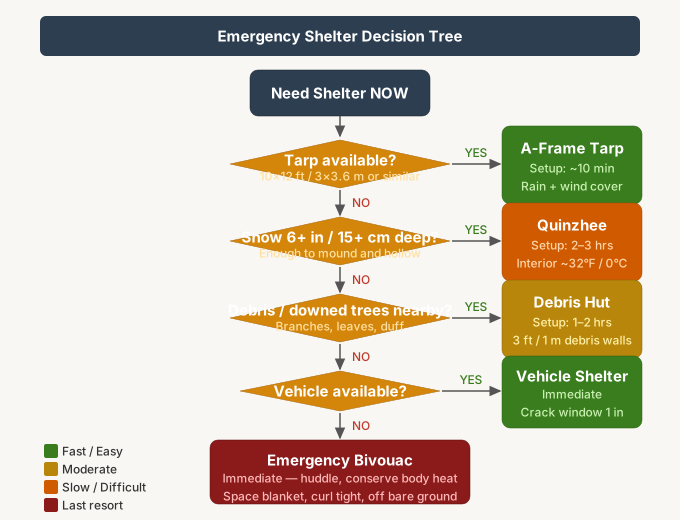
When you're caught outside without your home — stranded, evacuated, or displaced — your body loses heat to the environment faster than it produces it.
- Tarp shelter — 10×12 ft (3×3.6 m) silnylon tarp + 50 ft (15 m) paracord; 4 configurations (A-frame / lean-to / diamond / door-fold) cover most terrain and weather; setup 3–20 min depending on pitch
- Debris shelter — no manufactured materials; 30–36 in (75–90 cm) entrance ridgepole, 12–18 in (30–45 cm) rib spacing, 2–3 ft (60–90 cm) debris insulation, body-width interior; maintains survivable temp in below-freezing conditions with no fire
- Snow shelters — quinzhee (mounded + hollowed snow pile) holds interior near 32°F (0°C) regardless of wind chill; igloo from cut blocks is structurally superior; both require ≥3 ft (1 m) snow depth
- Vehicle shelter — insulation + ventilation + fuel management; engine 10–15 min/hour for heat; crack downwind window 1 in (2.5 cm) to prevent CO buildup per CDC vehicle-CO guidance
Hypothermia sets in before you realize it
Shivering is your body's last active defense against dropping core temperature. When shivering stops, it doesn't mean you've warmed up — it means your body has exhausted its reserves per Wilderness Medical Society staging. At that point, confusion, poor coordination, and irrational behavior begin (Stage HT II per Swiss staging). Build or improve shelter at the first sign of sustained shivering, not after it stops.
Hardening your home
Your current home is your best shelter for 90% of emergencies. Hardening it against grid-down conditions and regional threats is higher priority than any bug-out property or alternative shelter plan.
- Insulation — highest-return investment per ENERGY STAR; designate a "warm room" (smallest interior space, fewest exterior walls); add weatherstripping + heavy blankets over windows + door sweep
- Weatherproofing — caulking, door sweeps, window film, attic insulation; reduces heat loss 20–40% in older homes; weekend labor + inexpensive materials
- Shelter lighting — LED + solar lantern + candle setups for grid-down conditions
- Sanitation — waste-management basics for the 72-hour window after grid failure; humanure protocols, greywater discipline
- Waste management — household waste streams when trash service stops; bagging, sealing, burial protocols per EPA emergency-waste guidance
- Composting toilets — permanent off-grid solution for human waste without water or sewer per NSF/ANSI 41
- Septic systems — conventional septic + mound + constructed wetland alternatives; sizing per state DOH 1500–2000 gal tank for 3–4 bedroom households
Regional threats require specific hardening:
- Storm preparation — hurricane-zone impact shutters per FEMA P-320 + ASCE 7-22 wind-load provisions; pre-cut plywood panels for every window; safe-room concept
- Flood preparation — FEMA 100-year flood level elevation, sump pump capacity sizing, sandbag staging, NFIP requirements
- Fireproofing — defensible space 30 ft (9 m) cleared vegetation per NFPA 1144, ember-resistant vents, non-combustible roofing (Class A per ICC)
Building
When the goal shifts from surviving in your current home to building something purpose-designed, the options range from practical weekend projects to full construction. All permanent construction requires AHJ permits and IRC-compliant inspections in most US jurisdictions per International Code Council.
- Land selection — water access + solar exposure + soil quality + zoning + road access; mistakes here cascade through every subsequent decision
- Owner-built homes — acting as own general contractor: permit process, phased construction strategy, when to hire specialists
- Earthbag construction (superadobe) — filled polypropylene bags + barbed wire courses; fire-resistant, bullet-resistant, earthquake-tolerant, unskilled labor; ~$5–15 USD per sq ft (0.09 sq m) for structure
- Cob building — clay + sand + straw monolithic walls; outstanding thermal mass for hot-day / cold-night climates
- Timber framing — locally harvested wood with mortise-and-tenon joinery, no metal fasteners
- Structural insulated panel (SIP) prefab — panel R-values, thermal-bridge advantages, on-site labor + crane requirements
- Shipping container conversion — 20 ft (6 m) or 40 ft (12 m) steel box; structurally sound, weather-tight; $3,000–$8,000 USD delivered
- Tiny homes — wheels or foundation, 100–400 sq ft (9–37 sq m); faster, lower-cost path to off-grid living
Underground options provide protection that above-ground structures can't match:
- Underground shelters (bunkers) — reinforced basements through purpose-built bunkers; severe-weather, fallout, forced-entry protection
- Root cellars — double duty as food storage and storm shelter
- Reinforced basements — sealed ventilation, stored water, communication equipment; practical middle ground between standard home and dedicated bunker
Common questions
What's the single highest-return shelter upgrade for a typical home? Air sealing + insulation per ENERGY STAR home-resilience research — typically cuts heating/cooling load 20–40%, dramatically extends outage survivability, and pays back via lower energy bills. A blower-door test ($300–$500) identifies the biggest leaks. Weekend-DIY air-sealing materials cost <$200.
Can I really live in a 200 sq ft (19 sq m) tiny home long-term? Yes if you've practiced; usually no on first attempt. Per American Tiny House Association reporting, the failure mode is storage discipline, not square footage — households that own >3 bins of "I might need this someday" items can't downsize without distress. Spend 2 weeks in an Airbnb tiny home before committing.
Is earthbag / cob construction code-compliant? Increasingly yes — earthbag has 2021 IRC Appendix AS coverage; cob has 2024 IRC Appendix AU coverage per ICC. Both still require AHJ approval and engineered structural calculations in most jurisdictions. State and county adoption varies. Verify with your local building department before pouring concrete.
Should I build a bunker? For most US households, no — the cost-to-benefit math favors a hardened basement + tornado safe room (FEMA P-320 compliant) at 5–10% the cost of a dedicated bunker. Bunkers make sense for serious nuclear-threat planning, multi-week siege-scenario planning, or extreme remote locations where outside response time exceeds 72 hours.
Your single next step: complete the First 30 Days shelter chapter — it sequences warm-room designation, utility-shutoff labeling, and one tarp-shelter practice session into a 30-day plan that builds on this hub's three-scale framework.