Tsunami preparedness
Educational use only
This page is for educational purposes only. Hands-on skills should be learned and practiced under qualified supervision before relying on them in emergencies. Use this information at your own risk.
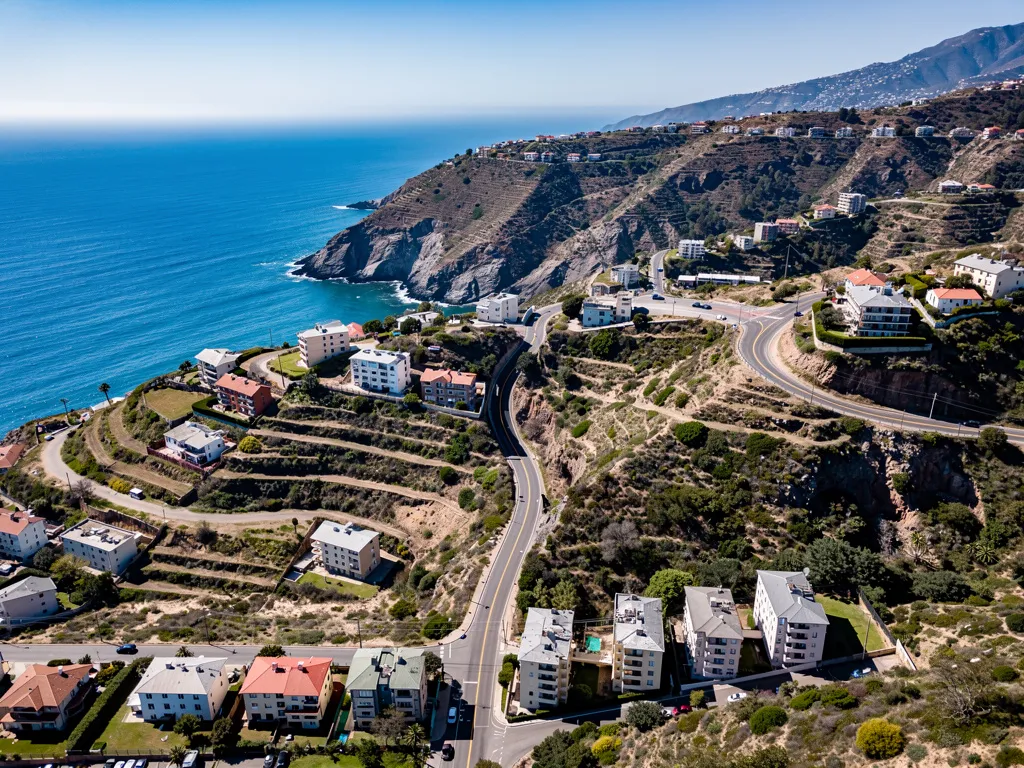
In deep ocean water, a tsunami travels at roughly 500–600 mph (800–970 km/h) — the speed of a commercial jet. You cannot outrun the wave from the water. What you can do is understand the mechanics well enough to recognize the warning signs, know your window, and be gone before the water arrives.
The 2011 Tōhoku earthquake and tsunami tested Japan's world-class warning infrastructure against a 9.0-magnitude event. The Japan Meteorological Agency issued a warning within three minutes of the quake. Despite that, the waves — reaching 40.1 meters (131 feet) at Ryōri Bay and traveling more than 5 km (3 miles) inland on the Sendai Plain — killed over 19,000 people. Seawalls rated for 8-meter (26-foot) waves were simply overtopped.
Research following the disaster found that 58% of people in the affected coastal prefectures evacuated immediately after the earthquake — and of those who tried to evacuate, only 5% were caught by the water. The difference between survival and death was largely whether people moved without waiting for confirmation.
How tsunamis form
About 80% of all known tsunamis are triggered by earthquakes, but three distinct mechanisms generate these waves. Understanding each helps you know when to act even in the absence of official alerts.
Earthquake-generated tsunamis are caused by vertical displacement of the seafloor. The earthquake must be shallow — typically less than 30 miles (50 km) deep — and must involve significant upward or downward movement of the ocean floor. Thrust-fault earthquakes, where one tectonic plate rides over another, are far more likely to generate tsunamis than strike-slip events. When the seafloor rises or drops, the entire water column above shifts with it; the resulting energy radiates outward in all directions. A magnitude 7.5 or greater is generally needed to produce a dangerous trans-oceanic tsunami, though local tsunamis have been generated by smaller events in specific fault geometries.
Submarine landslide tsunamis form when large volumes of material — sediment, rock, or a collapsing underwater slope — suddenly displace water. Unlike earthquake tsunamis, which distribute energy across hundreds of miles of coastline, landslide tsunamis can produce extremely tall but localized waves near the source. A 1958 landslide into Lituya Bay, Alaska, generated a wave run-up of 1,720 feet (524 meters) — the tallest recorded in modern history. These events can be triggered by earthquakes or occur independently on unstable slopes, and they can affect nearby coasts within minutes with little seismic warning.
Volcanic eruption tsunamis result from several mechanisms: pyroclastic flows entering the ocean at high speed, caldera collapse, flank collapse of a volcanic island, or the pressure shockwave from an explosive eruption. The 2022 Hunga Tonga–Hunga Ha'apai eruption generated tsunamis across the entire Pacific basin through atmospheric forcing — the pressure wave from the explosion arrived ahead of the water wave in some locations, confusing early warning models. The 1883 Krakatoa eruption-generated tsunami killed more than 36,000 people in Indonesia, with wave run-ups reaching 40 meters (131 feet).
How tsunamis move
In deep water, tsunami waves are almost imperceptible — they may be less than 1 meter (3 feet) tall with a wavelength of 100–500 km (60–300 miles). Passing ships don't feel them. As the wave enters shallower coastal water, energy compresses. Speed drops from hundreds of miles per hour to roughly 30–40 mph (48–65 km/h) near shore, but the wave height amplifies dramatically — a process called shoaling.
Bays, harbors, and river mouths focus tsunami energy and produce the greatest run-up heights. Open beaches typically receive less amplification than fjords or v-shaped inlets. The 2004 Indian Ocean tsunami, triggered by a 9.1-magnitude earthquake off Sumatra, demonstrated this variability: areas with fringing reefs or gradual offshore slopes absorbed more energy; straight coastlines and bays experienced devastation.
The 2004 event killed more than 227,000 people across 15 countries and remains the deadliest tsunami in recorded history. In Indonesia's Aceh province — nearest to the epicenter — warnings arrived with almost no lead time. In Thailand, the wave arrived roughly 90 minutes later, enough time for an evacuation that never happened because the warning infrastructure didn't exist yet.
Near-field vs. far-field events
The single most important variable in tsunami survival is how much time you have. That depends on the distance between the source and your location.
Near-field (local) events are generated by earthquakes, landslides, or volcanic activity close to your coast. Warning time is typically 10–15 minutes or less — often shorter than the time needed to drive through traffic to higher ground. In Cascadia Subduction Zone scenarios for the Pacific Northwest, wave arrival is estimated at 15–30 minutes after a major rupture for the nearest coastal communities. The earthquake itself is your warning signal. Do not wait for sirens.
Far-field (distant) events cross ocean basins. A tsunami generated off the coast of Alaska or Japan takes 7–8 hours to reach the Pacific Northwest. A Chile-generated wave takes roughly 13 hours to reach Southern California. These windows allow official warning systems to function properly and give coastal populations time to execute organized evacuations.
The Pacific Tsunami Warning Center (PTWC), operated by NOAA, monitors seismic activity around the clock and issues alerts for far-field events typically within 5–15 minutes of a qualifying earthquake. NOAA's US Tsunami Warning System uses four alert tiers:
| Alert Level | Meaning |
|---|---|
| Information Statement | Earthquake occurred; no destructive tsunami expected |
| Watch | Tsunami possible; prepare to evacuate |
| Advisory | Strong currents expected; stay away from shore |
| Warning | Destructive tsunami imminent; evacuate immediately |
Warnings are broadcast via Wireless Emergency Alerts (WEA) on cell phones, NOAA Weather Radio, local sirens, and Tsunami.gov. Enable WEA on every household phone and keep a battery-powered or hand-crank NOAA Weather Radio in your emergency kit.
Natural warning signs
Not all tsunamis are preceded by a formal warning. For local-source tsunamis — generated by an earthquake just offshore — the wave can arrive in minutes, before any official warning reaches you. In these events, the earthquake itself is the warning.
Treat any of these as immediate-action signals requiring evacuation without waiting for confirmation:
Strong or prolonged shaking near the coast. If you are on a coastline and feel an earthquake strong enough to make standing difficult, or that lasts more than 20 seconds, move immediately to high ground. Do not wait for shaking to stop.
Rapid sea withdrawal. The ocean pulling back dramatically from the shore — exposing the seafloor, beaching fish, draining tide pools — is a classic precursor to the incoming wave. This "drawback" was observed along Thailand and Indonesian coasts during the 2004 event. Not all tsunamis produce this sign, but when it appears, you have perhaps two to three minutes before the first wave arrives.
A loud roar from the ocean. Often described as a freight train or jet engine, this sound indicates the wave is already approaching. This is a last-resort signal — you are nearly out of time.
Official warning or sirens. The PTWC monitors seismic activity 24 hours a day. Sirens, Wireless Emergency Alerts, and NOAA Weather Radio broadcasts are the official warning mechanisms. For far-source tsunamis — generated by earthquakes in distant ocean basins — these systems provide hours of warning.
Field note
If the ocean recedes rapidly and unexpectedly, move inland immediately — do not wait for an official warning. The drawback is water being pulled into the base of the incoming wave. Your window once the drawback begins is measured in minutes, not hours.
The absence of shaking does not mean safety
Far-source tsunamis can arrive with no local earthquake at all. The wave generated by the 2011 Tōhoku earthquake reached Hawaii approximately 8 hours later with no perceptible ground shaking in Hawaii. Official warning systems are the only reliable advance notice for these events.
Know your zone before you need it
Tsunami inundation zones are mapped at the state level in the US. Most coastal states publish tsunami evacuation zone maps — often online and as road signs. These maps show which areas may be inundated by a credible worst-case event and where the boundary of high ground lies.
Look up your zone now. The key questions:
- Are you inside the inundation zone for your home, work, and children's school?
- Where is the nearest high ground outside the inundation zone?
- How long does it take to walk that route? (Not drive — roads may be clogged.)
Distance thresholds: Move at least 1 mile (1.6 km) inland or reach ground at least 100 feet (30 m) above sea level — whichever you can reach faster. These are minimums, not destinations. In high-relief coastal terrain, 100 feet (30 m) of elevation may be closer than 1 mile (1.6 km) of lateral distance; prioritize elevation.
In many Pacific Northwest coastal communities, designated vertical evacuation structures have been built in areas where horizontal evacuation to high ground is not possible within the available warning window. These are reinforced buildings with rooftop refuges designed to hold community members above projected inundation heights. Oregon, Washington, and Japan have built dedicated vertical evacuation towers following the 2011 disaster. Know if one exists near you and confirm it is publicly accessible.
Field note
Walk your tsunami evacuation route on foot, at a realistic pace, while carrying a bag. Note every bottleneck: narrow stairs, gated parking structures, bridges. The bridge connecting you to high ground may be damaged or jammed. Your backup route should not use the same bridge.
Evacuation decisions
For near-source events: Move immediately when you feel strong coastal shaking. Do not return to your home for belongings. Do not drive unless your route to high ground is completely clear — vehicles become obstacles in a tsunami evacuation and can strand you in the inundation zone. Move on foot. Elevation is the only variable that matters.
For far-source events with official warning: You have more time, but the common failure mode is complacency. People return to get belongings or decide to "watch from a safe distance." The 2011 Tōhoku event killed people who had evacuated to what they believed was safe ground but was later overtopped. Use official inundation zone maps, not personal estimates, to decide what is safe.
Children and schools: Coastal schools in tsunami zones should have documented vertical or horizontal evacuation procedures. If your children's school is in a mapped inundation zone, confirm these plans exist and that your children understand them independently — they may not be able to reach you during an event.
After the waves
Tsunamis produce multiple waves. The first wave is frequently not the largest — in many historical events, the second through fifth waves were the most destructive. The interval between wave arrivals can range from 10 minutes to over an hour. Do not return to the inundation zone until officials issue an all-clear. This process routinely takes 12 hours or more after the first wave; in some events, monitoring continued for 24–48 hours before zones were reopened.
The post-tsunami environment is hazardous independently of the water:
Structural damage is not always visible from the outside — buildings may appear intact while having compromised foundations or having been shifted off their footings. Submerged roads may have washed-out sections invisible beneath standing water. Downed power lines near standing water create electrocution hazards.
Water contamination is one of the most underestimated post-tsunami hazards. Inundation mixes seawater, sewage, fuel, agricultural chemicals, and industrial runoff with groundwater and well systems throughout the affected zone. Shallow wells in the inundation zone may remain contaminated for weeks to months. Treat all water from uncertain sources and do not assume tap water is safe until the utility issues a confirmed all-clear.
Gas and fire risk increases after inundation. Gas line damage causes leaks throughout the affected zone. Do not use open flames inside a building that was inundated until gas service has been professionally inspected.
Disease risk increases in crowded evacuation areas and anywhere sanitation has failed. The combination of contaminated water, disrupted waste treatment, and crowded shelters creates conditions for waterborne illness outbreaks. Maintain basic hygiene protocols even when supplies are limited.
Your water supply after a coastal tsunami event should be treated as compromised even if your tap is running. See the water purification foundation for field methods that work when municipal supply is uncertain. The flood preparedness page covers debris entry protocols and contaminated water assessment that apply directly to the post-tsunami environment.
Preparedness checklist
- Look up whether your home, workplace, and children's school are in a mapped tsunami inundation zone
- Identify ground at least 1 mile (1.6 km) inland or 100 feet (30 m) elevation from your most-used locations
- Walk at least two evacuation routes to high ground — measure time on foot, not by car
- Identify all vertical evacuation structures within walking distance of locations you frequently occupy
- Establish household trigger rules: strong coastal shaking = move immediately, no waiting for sirens
- Keep a lightweight go-bag (water, ID, medication, cash) near exit points — speed matters more than loadout during coastal evacuation
- Program NOAA Weather Radio and enable Wireless Emergency Alerts on all household phones
- Establish a family reunification plan that does not depend on cell phone communication
- Review your evacuation route for single points of failure (bridges, tunnels, narrow roads)
- Know the NOAA four-tier alert system: Information Statement, Watch, Advisory, Warning
Tsunami planning overlaps directly with earthquake preparedness — most Pacific Coast tsunamis are triggered by seismic events. See earthquake preparedness for the structural and supply preparations that apply to both. For evacuation vehicle planning and route documentation, the mobility foundation covers pre-loaded vehicle strategies and route alternates.