Gardening
A productive household garden shifts food security from passive (stored supplies) to active (ongoing production). A single 4×8 ft (1.2×2.4 m) raised bed, well-managed, produces 50–100 lbs (23–45 kg) of food per season from an affordable to moderate investment in startup materials. Three to four such beds, succession-planted, supply a significant fraction of a family's vegetables through the growing season.
This page covers the operational decisions — bed setup, soil mix, crop selection, planting schedules, and companion planting — for anyone building a resilient food garden from scratch or improving an existing one.
Start Here: What Actually Limits Yield
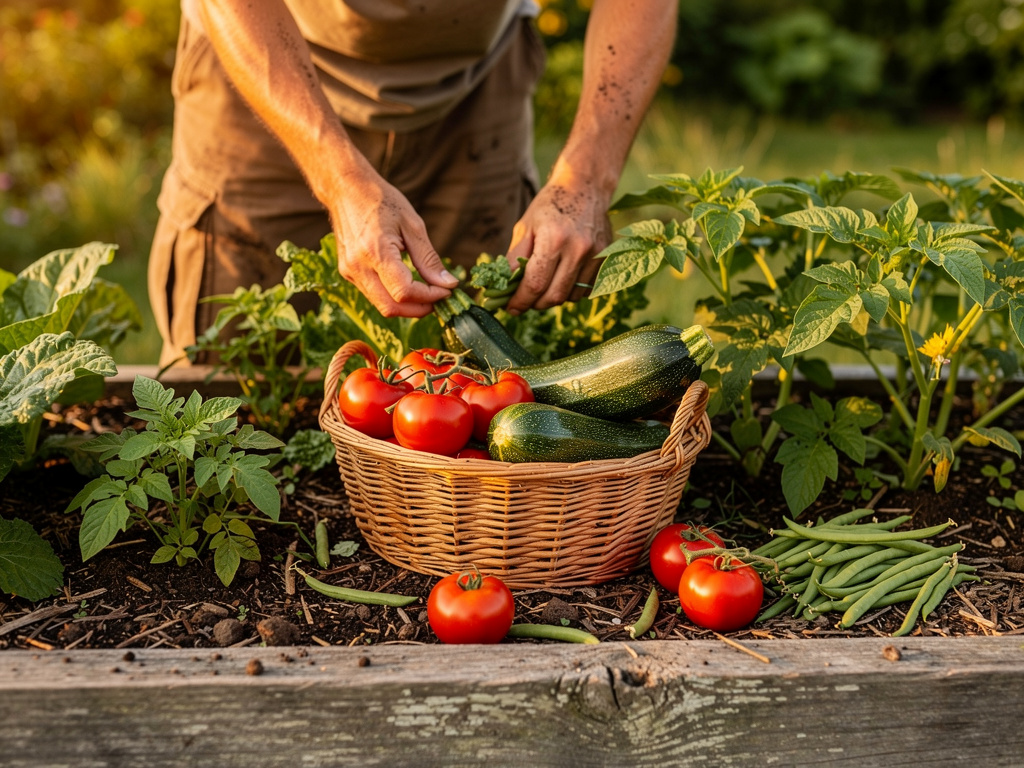
Most failing gardens share the same root causes, in roughly this order:
- Wrong soil — dense, clay, or nutrient-depleted native soil without amendment
- No succession planting — all crops planted at once, creating a glut then a gap
- Underwatering — sporadic watering causes stress and early bolting
- Pests not caught early — daily observation prevents almost all catastrophic losses
- Wrong crop for the zone or season — warm-season crops planted too early or cold-season crops left too long
Fix the soil first. Everything else is secondary.
Hardiness Zones and Planting Windows
USDA Hardiness Zones define the average annual minimum temperature in your region. They determine which perennials survive winter, but for annual vegetables what matters more is your last spring frost date and first fall frost date — together these define your growing season length.
| USDA Zone | Approx. Average Min Temp | Growing Season (Frost-Free Days) |
|---|---|---|
| Zone 4 | -20 to -30°F (-29 to -34°C) | 105–120 days |
| Zone 5 | -10 to -20°F (-23 to -29°C) | 130–150 days |
| Zone 6 | 0 to -10°F (-18 to -23°C) | 150–175 days |
| Zone 7 | 10 to 0°F (-12 to -18°C) | 175–200 days |
| Zone 8 | 20 to 10°F (-7 to -12°C) | 200–230 days |
| Zone 9 | 30 to 20°F (-1 to -7°C) | 230–270 days |
Find your specific last and first frost dates at a local extension service or weather database — these are the two dates your entire planting calendar hinges on.
Raised Bed Construction
A 4×8 ft (1.2×2.4 m) raised bed is the standard unit. It is accessible from both sides without stepping in the bed (compaction prevents root growth), and it holds enough soil volume for almost any crop. Build beds 10–12 in (25–30 cm) deep for most crops; 18 in (45 cm) for root crops like parsnips and carrots.
Materials: - Untreated cedar or redwood lumber: most rot-resistant; 2×10 or 2×12 boards are affordable per 4×8 bed - Galvanized corrugated metal panels: long-lasting, modern look; affordable to moderate investment per bed - Composite lumber or recycled plastic lumber: moderate investment; indefinite lifespan - Avoid pressure-treated lumber (CCA) — older formulations contain arsenic; modern ACQ treated lumber is considered safe but many gardeners avoid it for food crops
Siting: - Orient the long axis east-west so the bed receives sun all day - Minimum 6 hours of direct sunlight for fruiting crops - 3–4 hours acceptable for leafy greens and root crops - Avoid planting within 10 ft (3 m) of black walnut trees (juglone toxicity)
Mel's Mix: The Proven Raised Bed Soil
For raised beds, Mel Bartholomew's mix from Square Foot Gardening (first published 1981, updated 2013) remains the most field-tested no-native-soil approach:
- 1/3 blended compost — use 5+ different compost sources to diversify microbial populations
- 1/3 peat moss — retains moisture; coir is a more sustainable substitute at similar performance
- 1/3 coarse vermiculite — not perlite; vermiculite holds water and cation exchange sites for nutrients
Cost: A 4×8×10 in (1.2×2.4×0.25 m) bed requires approximately 3 cubic feet (0.085 m³) of each component — about 9 cubic feet (0.25 m³) total. Expect an affordable to moderate investment per bed for quality components. This mix never needs tilling — just top-dress with 1–2 in (2.5–5 cm) of compost each season.
If building multiple beds, the economics improve: buy peat in 3.8 cubic foot bales and vermiculite in bulk 50 lb (22.7 kg) bags. The compost component is free if you maintain a composting system.
Days to Harvest Reference Table
Planning a productive garden requires knowing how long each crop occupies the bed. This drives succession planting decisions.
| Crop | Days to Harvest | Season | Notes |
|---|---|---|---|
| Radishes | 22–30 days | Cool | Fast catch crop; plant in any gap |
| Lettuce (leaf) | 28–45 days | Cool | Cut-and-come-again extends harvest |
| Spinach | 40–50 days | Cool | Bolts quickly in heat above 75°F (24°C) |
| Green onions (scallions) | 60–70 days | Cool/Warm | Direct sow densely |
| Beets | 50–70 days | Cool | Eat greens at 30 days; roots at 60+ |
| Kale | 55–75 days | Cool | Frost improves flavor; harvest outer leaves |
| Beans (bush) | 50–60 days | Warm | Succession every 2–3 weeks |
| Zucchini | 45–55 days | Warm | One plant per 3 sq ft (0.28 m²); prolific |
| Cucumbers | 50–70 days | Warm | Trellis to save space |
| Peppers | 60–90 days | Warm | Start indoors 8–10 weeks before last frost |
| Tomatoes (cherry) | 55–70 days | Warm | Most productive per sq ft in home gardens |
| Tomatoes (slicing) | 70–90 days | Warm | Indeterminate types need caging/staking |
| Corn | 70–100 days | Warm | Needs large blocks for pollination; low yield/sq ft |
| Winter squash | 80–110 days | Warm | Harvest before first frost; stores 3–6 months |
| Garlic | 8–9 months | Plant fall, harvest summer | Excellent storage crop |
| Potatoes | 70–120 days | Warm | High caloric density; space-efficient in deep beds |
Succession Planting for Continuous Harvest
Succession planting is the practice of making staggered plantings of the same crop every 2–3 weeks, so harvests are continuous rather than all-at-once.
Basic schedule example for lettuce in a 4×8 bed: - Week 1: Plant one 4-square section of lettuce starts - Week 3: Plant a second 4-square section - Week 5: Harvest the first section; replant it; plant a third section - Continue rotation throughout the cool season
This approach also works with beans, radishes, salad greens, and cilantro. For warm-season crops, succession planting is limited by season length — instead, stagger transplanting by 2 weeks for earlier and later tomatoes to spread the harvest.
Season transitions: As one cool-season crop finishes, replace it immediately with a warm-season crop (or vice versa in fall). Beds should never sit empty.
Water Requirements
Most vegetable crops need approximately 1 inch (2.5 cm) of water per week, from rain or irrigation. Sandy soils may need 1.5 in (3.8 cm); clay soils or mulched beds may need less.
Practical water guidance: - A 4×8 ft (1.2×2.4 m) bed needs roughly 2 gallons (7.5 L) per watering session in moderate weather - Water in the morning — reduces fungal disease compared to evening watering - Water at the base, not overhead — wet foliage is the primary vector for tomato blight, powdery mildew, and other diseases - A 2–3 inch (5–8 cm) straw or wood chip mulch reduces watering frequency by 30–50% - Drip irrigation with a timer is the most efficient approach: 30–60% less water than hand-watering
Connect to rainwater harvesting to reduce municipal water dependence in extended drought periods.
Companion Planting
Companion planting uses plant relationships to reduce pest pressure, improve nutrient availability, and increase yields — without chemicals.
Three Sisters (Native American polyculture)
Plant corn first; when corn is 6 in (15 cm) tall, plant beans at the corn base; when beans sprout, plant squash between corn plants.
- Corn provides a vertical pole for beans
- Beans fix atmospheric nitrogen at root nodules, feeding corn and squash
- Squash spreads large leaves as living mulch, suppressing weeds and retaining moisture
Best suited to 64 sq ft (6 m²) or larger plots — three sisters underperforms in small patches due to corn's pollination requirements.
High-Value Companions
| Pairing | Benefit |
|---|---|
| Tomato + Basil | Basil may repel aphids and thrips; both benefit from similar water/sun requirements |
| Tomato + Marigold | French marigolds (Tagetes patula) suppress nematodes; repel some pests |
| Carrot + Onion | Onion scent deters carrot fly; carrot deters onion fly |
| Brassica + Dill or Chamomile | Attracts beneficial wasps that parasitize cabbageworms |
| Bean + Summer savory | Traditional pairing; savory may deter bean beetles |
| Cucumber + Nasturtium | Nasturtium acts as a trap crop for aphids |
Crop Rotation
Rotating crop families between beds each season reduces soilborne disease buildup and prevents nutrient depletion in specific zones. The four main groups:
- Nightshades (Solanaceae): Tomatoes, peppers, eggplant, potatoes — heavy feeders; follow with legumes
- Legumes (Fabaceae): Beans, peas — nitrogen fixers; excellent predecessors for heavy feeders
- Brassicas (Brassicaceae): Cabbage, kale, broccoli, Brussels sprouts — clubroot and white mold accumulate quickly; never grow in same spot two years running
- Roots/Alliums: Carrots, beets, onions, garlic — light feeders; follow nightshades
Minimum rotation cycle: 3–4 years before returning the same family to the same bed.
Pest Management
Principle: Address pests in this order before escalating — physical exclusion, hand removal, beneficial insects, organic sprays, and only then conventional pesticides if truly necessary.
| Pest | Physical Control | Organic Control |
|---|---|---|
| Aphids | Strong spray of water daily | Neem oil (0.5% solution), insecticidal soap |
| Cabbageworms | Row cover from transplanting; hand-pick daily | Bt (Bacillus thuringiensis) spray |
| Slugs | Diatomaceous earth perimeter; beer traps | Iron phosphate baits (Sluggo) |
| Squash vine borer | Row cover during egg-laying window | No reliable organic treatment after borer is inside stem |
| Tomato hornworm | Hand-pick at night (use a UV flashlight) | Bt spray on foliage |
| Flea beetles | Row cover on brassica seedlings | Kaolin clay foliar spray |
Field Note
Walking your garden for 5 minutes every morning catches 90% of pest problems before they become crises. Aphid colonies double every 2–3 days under ideal conditions — a dozen aphids spotted Monday becomes a thousand by Friday. Pinch off heavily infested leaves immediately and drop them in a bucket of soapy water. This is faster and cheaper than any spray program.
Startup Cost Reference
| Setup | Approximate Cost | Beds/Plants |
|---|---|---|
| Single 4×8 ft raised bed (cedar lumber + Mel's Mix) | moderate investment | 1 bed |
| Basic in-ground amended plot (4×8 ft) | affordable | 1 plot |
| Seed collection for a 4×8 bed (10–15 varieties) | affordable | 1 full bed |
| Transplants from nursery (6-pack) | inexpensive per 6-pack | — |
| Drip irrigation kit for 1–3 beds | affordable | 1–3 beds |
| Row cover fabric (10×25 ft / 3×7.6 m roll) | inexpensive | Multiple beds |
Annual recurring costs after the first season drop to inexpensive for seeds and soil amendment (assuming a composting system reduces or eliminates bagged compost purchases).
Connecting Your Garden to the Broader Food System
A productive garden feeds directly into food preservation — surpluses go to canning, dehydrating, or root cellar storage (see root cellar construction). Seeds saved from open-pollinated varieties close the loop on annual input dependence. Over time, a permaculture design integrates perennial food plants with annuals for reduced labor and more stable yields.
Soil health is the foundation everything else runs on. Invest in it every season.
Practical Checklist
- Determine your last and first frost dates; calculate season length
- Select 5–8 crops based on what your household actually eats
- Build or designate at least one 4×8 ft (1.2×2.4 m) bed; fill with Mel's Mix or amended native soil
- Write a planting calendar with succession intervals for quick-turn crops
- Set up a watering system (drip or consistent hand-watering schedule)
- Apply 2–3 in (5–8 cm) of mulch after transplanting
- Walk the garden for 5 minutes every morning during peak growing season
- Plan crop rotation: no family in the same bed two years running