Threats
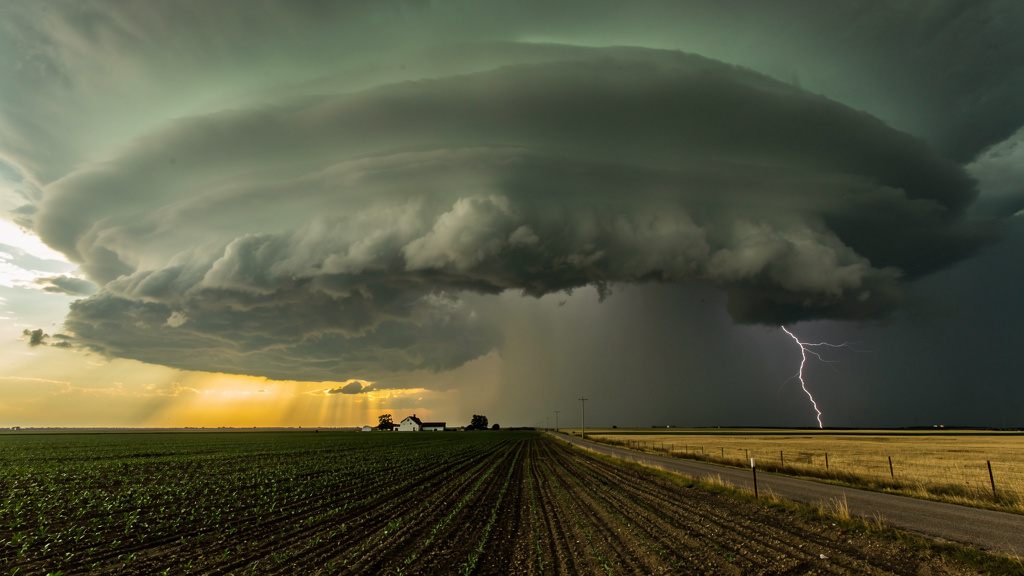
The most useful question in preparedness isn't "what's the worst thing that could happen?" It's "what's most likely to happen here, and am I ready for it?" A family in coastal Texas that spends all their effort preparing for an electromagnetic pulse (EMP) while ignoring hurricane season has their priorities inverted. The threats that deserve your attention first are the ones with the highest probability of actually affecting your household in the next 5 years.
This Foundation organizes threats into four categories ranked by general probability: natural hazards (near-certain for most regions), infrastructure failures (likely, especially in aging grids), societal disruptions (moderate probability, high impact), and chemical, biological, radiological, and nuclear (CBRN) events (low probability, extreme impact). Your regional profile determines which specific threats within each category deserve the most preparation.
Natural hazards
These are the threats you will almost certainly face at some point, depending on your geography. The preparation they require overlaps heavily with every other Foundation — the household that has water, food, shelter hardening, energy backup, and a communication plan is already 80% prepared for any natural hazard.
Winter storms and ice events knock out power, block roads, and freeze pipes. They affect the largest geographic area of any natural hazard in North America. An ice storm in 2021 left 4.5 million Texas households without power for days in below-freezing temperatures. Preparation centers on the energy and shelter Foundations — backup heat, insulation, stored water, and food that doesn't require cooking.
Hurricanes give 3-7 days of warning but demand hard decisions about evacuation timing. Your mobility plan and pre-established evacuation routes determine whether you leave smoothly or sit in gridlock. Flooding — both coastal surge and inland river flooding — causes more property damage annually than any other natural disaster in the US.
Earthquakes give zero warning. Structural damage, ruptured gas lines, broken water mains, and fires follow within minutes. Preparation is almost entirely pre-event: securing heavy furniture, knowing your gas shutoff, storing shoes and a flashlight next to your bed, and having your water supply independent of municipal infrastructure.
Wildfires move faster than most people estimate — up to 14 mph (23 km/h) in grassland, driven by wind. Defensible space, an evacuation trigger (leave when told, not when you see flames), and pre-loaded vehicles are the difference between losing property and losing lives.
Tornadoes, drought, volcanic events, and landslides, mudslides, and avalanches round out the natural hazard category, each with region-specific preparation profiles. Landslides deserve particular attention in post-wildfire burn-scar areas — saturated slopes that held for decades can fail within hours of heavy rain after vegetation is lost. Heat waves are the deadliest natural hazard in the US by annual body count — passive cooling, hydration protocols, and recognizing heat exhaustion before it progresses to heatstroke are essential in any warm-climate plan. Coastal and island communities must also account for tsunamis, which can follow earthquakes, submarine landslides, or volcanic events with as little as 10–15 minutes of warning for near-field sources.
Field note
Check your county emergency management website for a published hazard mitigation plan. Most counties in the US have one — it lists every historical disaster, the probability of recurrence, and the areas most at risk. It's the single most useful document for calibrating your personal threat priorities.
Infrastructure failures
Modern infrastructure is interdependent. The electrical grid powers water treatment, which enables sanitation, which keeps hospitals functional, which maintains public health. A failure in any node cascades.
A grid-down event lasting 3-14 days is the most likely infrastructure failure and the one your energy Foundation directly addresses. Extended grid-down lasting weeks to months has occurred in Puerto Rico (2017, 4-11 months for full restoration) and is plausible for any region hit by a severe storm or coordinated attack on substations.
An EMP (electromagnetic pulse) — whether from a high-altitude nuclear detonation or a severe solar storm (Carrington-class event) — could disable electronics and transformer infrastructure across a continental scale. The probability is low but the impact is civilization-altering. Faraday protection for critical electronics (radios, solar charge controllers, medical devices) is the primary mitigation.
Cyber attacks targeting infrastructure — power grids, water systems, fuel pipelines — have moved from theoretical to demonstrated. The 2021 Colonial Pipeline ransomware attack disrupted fuel supply across the US Southeast for a week. Preparation mirrors grid-down: energy independence, stored water, and fuel reserves.
Supply chain disruptions — whether from pandemic, labor action, geopolitical conflict, or cascading infrastructure failure — empty shelves within 72 hours. Your food storage and water reserves are the buffer. A communications blackout — from solar storms, undersea cable cuts, or cascading grid failure — can occur independently of any other infrastructure event and eliminates the news feeds and alerts most people rely on to track a developing situation.
Societal disruptions
Economic disruption — hyperinflation, bank failures, prolonged unemployment, currency instability — erodes purchasing power and access to goods over weeks to months rather than instantly. Preparation focuses on reducing dependency on cash flow: stored food reduces grocery bills, energy independence reduces utility bills, and barter capability provides access to goods outside the monetary system.
Pandemics require sustained isolation, supply discipline, and medical preparedness including personal protective equipment (PPE), sanitation protocols, and quarantine planning. The 2020 experience demonstrated that supply chains, healthcare systems, and social structures all strain simultaneously.
Civil unrest varies from localized protests to sustained instability affecting supply lines and public safety. Security awareness, OPSEC, and the grey man principle — moving through disrupted areas without drawing attention — are the primary mitigations.
Understanding cascading and compound disasters — how one event triggers the next — is the conceptual key to this entire Foundation. The second and third-order effects (flooding after an earthquake, disease after a flood, economic disruption after a pandemic) are frequently worse than the initial event. Preparation that addresses only the headline threat often fails at the follow-on.
CBRN events
Chemical, biological, radiological, and nuclear events are low-probability but high-consequence. Nuclear preparation focuses on understanding fallout patterns, shelter-in-place duration (48 hours minimum for initial decay), and decontamination procedures. Chemical and biological threats emphasize PPE, evacuation timing, and contamination avoidance.
Probability is not zero
The low-probability events in this section have all occurred within living memory somewhere in the world. Nuclear accidents (Chernobyl, Fukushima), chemical spills (Bhopal, East Palestine), and biological outbreaks (COVID-19, Ebola) are not science fiction. Prepare for the likely first, but don't ignore the severe.
Where to start
- Identify the 3 natural hazards most likely to affect your specific location — check your county hazard mitigation plan
- Write a one-page response plan for each: what triggers action, where you go, what you grab, who you contact
- Run a 48-hour grid-down drill this month — kill the main breaker Friday night, restore Sunday morning, document every gap
- Review your homeowner's or renter's insurance for disaster coverage gaps — flood insurance is separate and often required
- Set a 6-month calendar reminder to reassess your threat priorities and update your response plans
Every other Foundation feeds into this one. Your threat assessment determines how deep to go in water, how much food to store, how seriously to take energy independence, and how far to develop your mobility plan. Start with what's probable. Build toward what's severe.