Herbal medicine safety and drug interactions
Educational use only
This page provides general educational information for emergency preparedness scenarios when professional medical care is unavailable. It is not a substitute for professional medical advice, diagnosis, or treatment. Herb-drug interactions can cause serious harm, including transplant rejection, contraceptive failure, and liver failure. Always seek the advice of a qualified healthcare provider. Use this information at your own risk.
Herbal medicines carry real pharmacological activity — the same properties that make them useful also make them capable of amplifying, blocking, or dangerously altering the effects of prescription drugs. The most critical safety hazard in preparedness herbalism is not plant misidentification; it is an unrecognized interaction between a common herb and a medication someone already takes. St. John's Wort alone has been documented to trigger acute transplant rejection and HIV treatment failure by accelerating the breakdown of drugs the patient depends on for survival.
This reference covers the interaction risks that matter most in a self-reliant medical context: which herbs conflict with which drug classes, which must be avoided entirely during pregnancy, how to scale doses for children, how to verify that stored herbs are still potent, and which plants are never safe to use internally regardless of claimed traditional use.
Drug interaction table
The herbs below carry the most clinically significant interactions with commonly prescribed medications. The risk ratings reflect severity when both the herb and the affected drug are used concurrently at typical doses.
High-risk combinations
St. John's Wort with cyclosporine (transplant anti-rejection), HIV antiretrovirals, or oral contraceptives is not a theoretical risk — it has caused documented transplant rejections, HIV rebound, and unintended pregnancies in clinical settings. If anyone in your household takes these medications, St. John's Wort must be kept out of the herbal medicine cabinet entirely.
| Herb | Affected Drug Class | Mechanism | Clinical Risk |
|---|---|---|---|
| St. John's Wort (Hypericum perforatum) | HIV antiretrovirals, oral contraceptives, warfarin, cyclosporine, SSRIs, digoxin | CYP3A4 and P-glycoprotein inducer — accelerates drug metabolism, reducing blood levels by up to 80% | Serious: contraceptive failure, transplant rejection, HIV rebound, serotonin syndrome (with SSRIs) |
| Valerian (Valeriana officinalis) | Benzodiazepines, barbiturates, alcohol, opioids, antihistamines | CNS depressant potentiation — additive sedation | Serious: excessive sedation, respiratory depression risk |
| Ginkgo (Ginkgo biloba) | Warfarin, aspirin, NSAIDs, SSRIs | Antiplatelet and anticoagulant additive effect — inhibits platelet-activating factor | Moderate: increased bleeding risk, especially peri-operative |
| Goldenseal (Hydrastis canadensis) | CYP3A4 and CYP2D6 substrate drugs (extensive list) | Enzyme inhibitor — slows drug metabolism, raising blood levels and toxicity risk | Varies: drug-dependent — any CYP3A4 or CYP2D6 substrate warrants caution |
| Ashwagandha (Withania somnifera) | Thyroid medications, immunosuppressants, sedatives | May increase thyroid hormone output; additive immunostimulation; CNS depressant | Moderate: thyroid imbalance, sedation, counteracts immunosuppression |
| Echinacea (Echinacea purpurea/angustifolia) | Immunosuppressants, hepatotoxic drugs | Immune stimulation counteracts immunosuppressive therapy; theoretical hepatotoxicity risk with long-term use | Moderate: transplant patients, autoimmune conditions |
| Garlic (Allium sativum) | Warfarin, HIV antiretrovirals, NSAIDs | Antiplatelet; mild CYP3A4 induction | Moderate: increased bleeding risk, reduced antiviral drug levels |
| Ginger (Zingiber officinale) | Warfarin, NSAIDs, antihypertensives | Antiplatelet; mild hypotensive effect | Mild-moderate: additive bleeding risk, additive blood pressure lowering |
| Licorice root (Glycyrrhiza glabra) | Corticosteroids, antihypertensives, digoxin | Pseudoaldosteronism — sodium retention, potassium depletion | Moderate: hypokalemia, hypertension, edema, increased digoxin toxicity |
| Chamomile (Matricaria chamomilla) | Warfarin | Coumarin content — mild additive anticoagulant effect | Mild-moderate: elevated bleeding risk at high consumption volumes |
Reading the table in the field
Three things determine how seriously to treat a listed interaction:
-
The drug's margin of safety. Warfarin, digoxin, and cyclosporine all have narrow therapeutic windows — small changes in blood levels shift outcomes from therapeutic to toxic or sub-therapeutic. Any herb interacting with these drugs should be treated as high risk regardless of the rating listed.
-
Dose and duration. A single chamomile tea has minimal interaction risk with warfarin. Daily high-dose chamomile over weeks is a different situation. The dose-response relationship applies to herb-drug interactions the same way it applies to drugs.
-
The mechanism. Enzyme induction (St. John's Wort, garlic) reduces drug levels — drugs stop working. Enzyme inhibition (goldenseal) raises drug levels — drugs become toxic. Additive effects (valerian with sedatives, ginkgo with blood thinners) stack the action. Know which mechanism applies before making a judgment call.
Field note
A pharmacist at any open pharmacy can check for interactions in under 60 seconds using a clinical database. Before a scenario escalates to grid-down conditions, run your household's complete medication and supplement list through a free interaction checker — Drugs.com or Medscape Drug Interactions are both reliable. Screenshot the results and keep them in your medical binder.
Herbs to avoid during pregnancy
Pregnancy introduces a second patient with different vulnerability. Many herbs that are safe for general adult use carry emmenagogue, abortifacient, or uterotonic properties that pose direct risk to a developing fetus — particularly in the first trimester, when organogenesis is most vulnerable. Others cross the placental barrier and affect fetal development through systemic mechanisms.
The core rule for pregnancy
"Natural" does not mean safe during pregnancy. Several of the most dangerous herbs for fetal development — pennyroyal, blue cohosh, tansy — have long histories of traditional use as abortifacients precisely because they are effective at terminating pregnancies. Consult an obstetrician or midwife before taking any herbal supplement during pregnancy.
Absolute avoidance — all trimesters
These herbs have documented abortifacient, uterotonic, or teratogenic mechanisms. No safe dose exists during pregnancy.
- Blue cohosh (Caulophyllum thalictroides): caulosaponin and caulophyllosaponin are potent uterine stimulants; associated with neonatal myocardial infarction and multiorgan failure in case reports
- Pennyroyal (Mentha pulegium): pulegone is a direct uterotoxin and hepatotoxin; the essential oil has caused maternal deaths at doses used to induce abortion
- Tansy (Tanacetum vulgare): thujone content causes convulsions and uterine stimulation; highly toxic at medicinal doses
- Rue (Ruta graveolens): alkaloids cause uterine contraction and fetal toxicity; used historically as an abortifacient
- Mugwort (Artemisia vulgaris): volatile oils are emmenagogues; stimulates uterine contractions
- Savin juniper (Juniperus sabina): sabinol content is a direct uterotoxin; historically the most used plant abortifacient in Europe
- High-dose culinary herbs: thyme, rosemary, and sage at medicinal (not culinary) doses have uterotonic activity; normal cooking amounts are not a concern, but supplements or concentrated preparations should be avoided
Avoid during the first trimester
Insufficient safety data, theoretical risk, or evidence of effect on early fetal development justifies avoiding these herbs until the second trimester unless directed otherwise by a qualified provider.
- St. John's Wort: crosses the blood-brain barrier; no adequate fetal safety data; theoretical neurotransmitter effects on developing brain
- Valerian: GABAergic activity; no fetal safety data; theoretical CNS effects on early neurological development
- Black cohosh (Actaea racemosa): phytoestrogenic; uterotonic properties documented; avoid through entire pregnancy in most references
- Goldenseal: berberine content crosses the placenta and has been shown to cause uterine contractions in animal models; may compete with bilirubin binding postpartum
- Ginkgo: antiplatelet effects increase bleeding risk around delivery; associated with spontaneous bleeding events
- Dong quai (Angelica sinensis): coumarin derivatives are anticoagulant; ferulic acid has uterine stimulant properties
Avoid throughout pregnancy
These herbs have systemic toxicity profiles that rule out use regardless of trimester.
- Comfrey (Symphytum officinale): pyrrolizidine alkaloids are genotoxic and hepatotoxic; no safe internal dose; the German Commission E and EMA restrict it to short-term topical use on intact skin only
- Ephedra/Ma huang (Ephedra sinica): cardiovascular stimulant; banned from dietary supplements in the US since 2004; hypertension risk in pregnancy
- Kava (Piper methysticum): hepatotoxic at high doses with long-term use; kavalactones cross the placenta; associated with adverse neonatal outcomes
- Chaparral (Larrea tridentata): nordihydroguaiaretic acid (NDGA) is a documented hepatotoxin; associated with liver and kidney failure
Generally considered safe in culinary amounts
These herbs have reassuring safety profiles at the volumes used in normal cooking and occasional teas. They do not carry the same risk as the herbs above, but concentrated supplemental doses move them into uncertain territory.
- Ginger: well-studied for pregnancy nausea at up to 1 gram (0.035 oz) daily; culinary use considered safe
- Chamomile: occasional cup (1-2 per week) is generally regarded as low risk; daily high-volume consumption has been associated with preterm labor in some studies — avoid habitual heavy use
- Peppermint: tea form is generally considered safe for digestive symptoms; the essential oil is not safe internally at any stage of pregnancy
Children's dosing — Clark's Rule and Young's Rule
Standard adult herbal doses are calibrated for a 150-pound (68 kg) adult. Children are not small adults — their metabolic capacity, organ maturity, and body surface area all differ in ways that affect how herbs and medications are processed.
These two historical formulas allow rough dose scaling when weight-based pediatric dosing is not available. Both are approximations; neither accounts for age-related metabolic differences. Use them for planning reference only, and never for herbs with significant interaction risks.
Clark's Rule (weight-based — preferred)
Formula: Child dose = (Child's weight in lb ÷ 150) × Adult dose
| Child's weight | Fraction of adult dose | Example: 30 mL adult tincture dose |
|---|---|---|
| 30 lb (14 kg) | 20% | 6 mL |
| 45 lb (20 kg) | 30% | 9 mL |
| 60 lb (27 kg) | 40% | 12 mL |
| 75 lb (34 kg) | 50% | 15 mL |
| 100 lb (45 kg) | 67% | 20 mL |
Weight is a better predictor than age alone, which is why Clark's Rule is preferred over Young's Rule when a scale is available.
Young's Rule (age-based — use when weight is unknown)
Formula: Child dose = (Age ÷ (Age + 12)) × Adult dose
| Child's age | Fraction of adult dose |
|---|---|
| 3 years | 20% |
| 6 years | 33% |
| 9 years | 43% |
| 12 years | 50% |
Safety limits for pediatric herbal dosing
These rules are non-negotiable regardless of what a formula calculates:
- Start at 25% of the Clark's calculated dose for any herb the child has not previously taken, then monitor for 30 minutes before the next dose.
- Never apply these rules to herbs with significant drug interactions. Clark's Rule cannot make St. John's Wort safe for a child on medication — it remains contraindicated.
- Children under 2 years old should receive no herbal preparations except under direct medical supervision. Infant metabolic pathways are not proportional to weight.
- Infants and toddlers react unpredictably to even small doses of sedating herbs (valerian, passionflower, kava). Avoid entirely.
- Modern clinical practice uses weight-based dosing in kilograms (mg/kg) whenever actual weight-per-dose data exists for the herb. Use the formulas above only when that data is unavailable.
Field note
Glycerite tinctures (glycerin-based rather than alcohol-based) are preferred for children's herbal preparations. They are palatable, alcohol-free, and dose easily with a standard dropper. Store in dark glass bottles, label with the herb name, preparation date, and calculated dose for the child's current weight.
Potency testing — verifying herb quality before use
Dried herbs degrade over time and with improper storage. An herb that looks intact but has lost its volatile oils delivers neither therapeutic benefit nor consistent dose — but it can still deliver active alkaloids and interaction risks. Checking potency before use prevents both therapeutic failure and unexpected toxic effects from herbs that have concentrated rather than degraded.
The five-point quality check
1. Smell test (primary indicator for aromatic herbs) Hold a small amount of the dried herb in your palm, crush gently with your thumb, and smell immediately. Peppermint should smell sharply of menthol. Lavender should be immediately floral. Thyme should be unmistakably herbal-pungent.
If the smell is faint, dusty, or vague, the volatile oils have degraded. Aromatic herbs with no recognizable scent have lost the majority of their therapeutic activity and should be replaced.
2. Color check Each herb has a characteristic color when properly dried and stored. Compare against a fresh reference or a known-good sample: - Chamomile flowers: pale yellow with white petals, not uniform brown - Echinacea root: grey-beige with visible resin threads, not dusty grey - Calendula petals: deep orange to gold, not tan - Green leaf herbs: should retain some green, not fade entirely to olive or brown
Uniform grey-brown fading in any herb indicates oxidation and volatile compound loss.
3. Taste test Crush a peppercorn-sized amount between your fingers and taste a trace amount on the tip of your tongue. It should have the herb's characteristic flavor — sharp, bitter, astringent, pungent, or sweet depending on the plant. Flat, dusty, or tasteless herbs have lost their active compounds. (Exception: do not taste-test any herb you cannot positively identify, or any herb in the "never take internally" list below.)
4. Moisture check Properly dried herbs (at 10-12% moisture) should crumble cleanly under light pressure. A leaf should snap, not bend. A root slice should break, not flex. Herbs that clump, bend, or feel leathery contain excess moisture.
Excess moisture creates two problems: active compound degradation from microbial activity, and mold growth. Discard any herb showing fuzzy growth, dark spots, or a musty smell regardless of other quality indicators.
5. Tincture color and clarity (for prepared liquid extracts) A properly made tincture should be deeply colored, appropriate to the source herb — echinacea produces dark amber to brown, calendula produces gold-orange, elderberry produces deep purple-red. A faded, pale, or cloudy tincture may indicate over-dilution, oxidation, or microbial contamination. Cloudiness in an alcohol-based tincture that was previously clear suggests water contamination and potential degradation.
Internal-use bans — herbs that must never be taken internally
The following plants have toxicity profiles severe enough that no credible herbalist or medical authority recommends internal use by self-treating individuals outside clinical supervision. These bans are not overcautious — they are based on documented cases of organ failure and death.
These herbs are not for internal use
The herbs below have caused liver failure, kidney failure, cardiac arrest, and death. They may appear in traditional herbal references, online preparedness blogs, or historical remedy lists. The traditional use context does not make them safe — in many cases, the traditional use was precisely as an abortifacient or poison, not as a medicine.
Comfrey (Symphytum officinale, all parts but especially root) Pyrrolizidine alkaloids (PA) — specifically symphytine, echimidine, and lycopsamine — cause hepatic sinusoidal obstruction syndrome (formerly hepatic veno-occlusive disease). PAs are genotoxic: they form DNA adducts in liver cells that cause progressive, cumulative damage. The FDA recommended removing all internal comfrey products from the market. The European Medicines Agency restricts comfrey to short-term topical use on unbroken skin only.
Do not make or drink comfrey tea. Topical use of commercial creams on intact skin is considered acceptable at short durations (under 6 weeks); do not apply to open wounds or broken skin.
Raw elderberries (Sambucus nigra) Uncooked elderberries and elderflowers contain sambunigrin, a cyanogenic glycoside that hydrolyzes to hydrogen cyanide in the gut. Symptoms: nausea, projectile vomiting, diarrhea, and in large amounts, cyanide toxicity. Cooking or thorough drying deactivates sambunigrin. Commercial elderberry syrup is cooked and safe; raw berries eaten in quantity or raw juice pressed from uncooked berries are not. The ripe cooked berry is medicinal; the raw berry is a dose-dependent poison.
Pennyroyal essential oil (Mentha pulegium) The essential oil is a concentrated hepatotoxin and abortifacient. Ingestion of as little as 10 mL (0.35 oz) has caused severe toxicity; 15 mL (0.5 oz) has caused death within 1-2 hours. The active toxin, pulegone, is converted by cytochrome P450 enzymes to menthofuran, which depletes hepatic glutathione and causes acute liver failure. Treat any suspected pennyroyal oil ingestion as a poisoning emergency — N-acetylcysteine (the acetaminophen antidote) is the treatment, administered in a clinical setting. Pennyroyal leaf tea at very low doses has traditional use, but the oil is categorically unsafe internally.
Ephedra/Ma huang (Ephedra sinica) Banned from dietary supplements in the United States since April 2004 by the FDA due to cardiovascular risk — hypertension, tachycardia, stroke, and cardiac arrest. The ban followed multiple documented deaths. Ephedrine alkaloids remain in pharmaceutical-grade formulations under medical supervision; the plant material in any supplement or preparedness herb kit should be discarded.
Kava (Piper methysticum, high-dose or long-term use) Kavalactones cause hepatotoxicity under conditions of high dose or prolonged use. Several countries issued regulatory alerts after cases of acute liver failure in users taking commercial kava supplements. Traditional ceremonial use at lower doses in Pacific Island cultures has a long safety record; Western supplement-grade concentrated extracts do not. Kava is not appropriate as a daily supplement.
Dangerous lookalikes — visual identification
Several medicinal plants have deadly lookalikes that grow in the same regions and share superficial features. Misidentification kills — poison hemlock, pokeweed, and foxglove have all caused fatalities when confused with their safe counterparts. The three comparisons below cover the most commonly confused pairs encountered during wild foraging and medicinal herb collection.
Every identification should use multiple features, not just one. A single matching characteristic is never enough to confirm a plant is safe to use.
Yarrow vs. poison hemlock
Yarrow (Achillea millefolium) is a common medicinal herb used for wound care and fever reduction. Poison hemlock (Conium maculatum) is one of the most toxic plants in North America and Europe — the plant that killed Socrates. Both have white umbrella-shaped flower clusters and finely divided feathery leaves, making them easy to confuse at first glance.
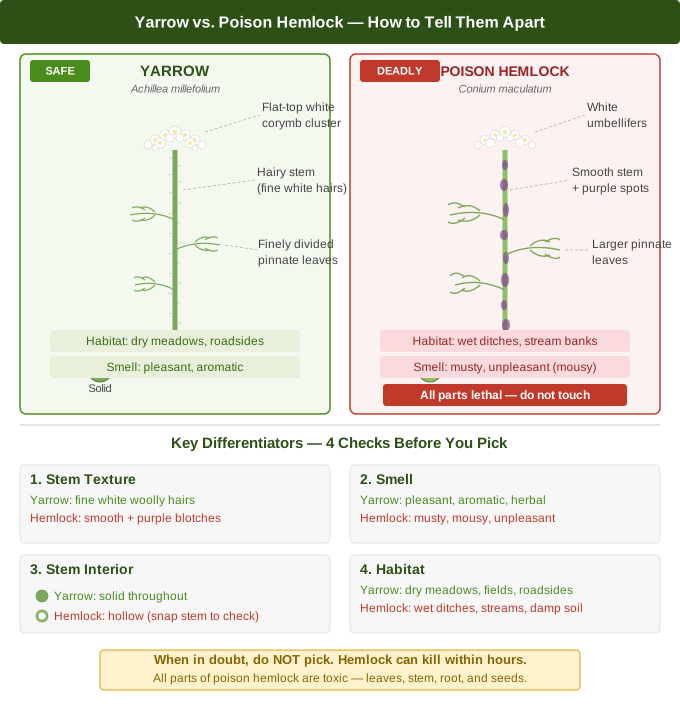
Diagram for reference only
This illustration shows key identification features but cannot substitute for hands-on botanical training. Confirm identification using multiple features simultaneously (stem texture, smell, habitat, leaf structure). When uncertain, do not use.
The single most reliable field test is the stem: yarrow stems are covered in fine white woolly hairs and are solid when snapped, while hemlock stems are completely smooth, show distinctive purple blotches, and are hollow inside. If you snap a stem and it is hollow with purple spots, drop it immediately and wash your hands.
Elderberry vs. pokeweed
Elderberry (Sambucus nigra) is widely used in immune-support preparations. Pokeweed (Phytolacca americana) is toxic in all parts and has caused deaths in children who ate the attractive dark berries. The two plants produce dark purple-black berries that can appear similar from a distance.
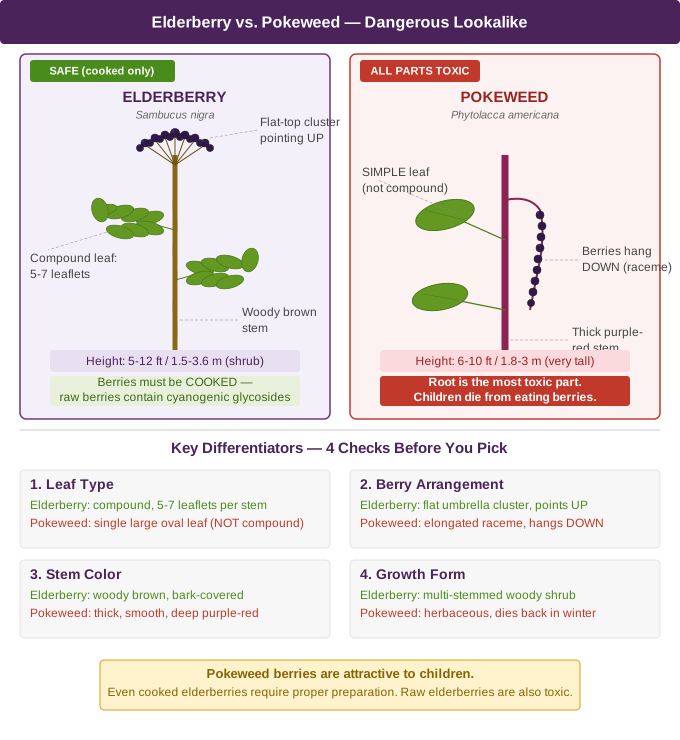
Diagram for reference only
This illustration shows key identification features but cannot substitute for hands-on botanical training. Confirm identification using multiple features simultaneously (stem texture, smell, habitat, leaf structure). When uncertain, do not use.
The fastest field check is the leaves: elderberry has compound leaves with 5 to 7 leaflets arranged along a stem, while pokeweed has single large oval leaves. Berry arrangement is the second confirmation — elderberry clusters form flat umbrella shapes pointing upward, while pokeweed berries hang down in elongated grape-like racemes on distinctive purple-red stems.
Comfrey vs. foxglove
Comfrey (Symphytum officinale) is used externally for sprains and bone injuries. Foxglove (Digitalis purpurea) contains cardiac glycosides (digitalis) that cause fatal heart arrhythmias. The two plants are most commonly confused in their first year of growth, before flowering, when only the basal leaf rosettes are visible.
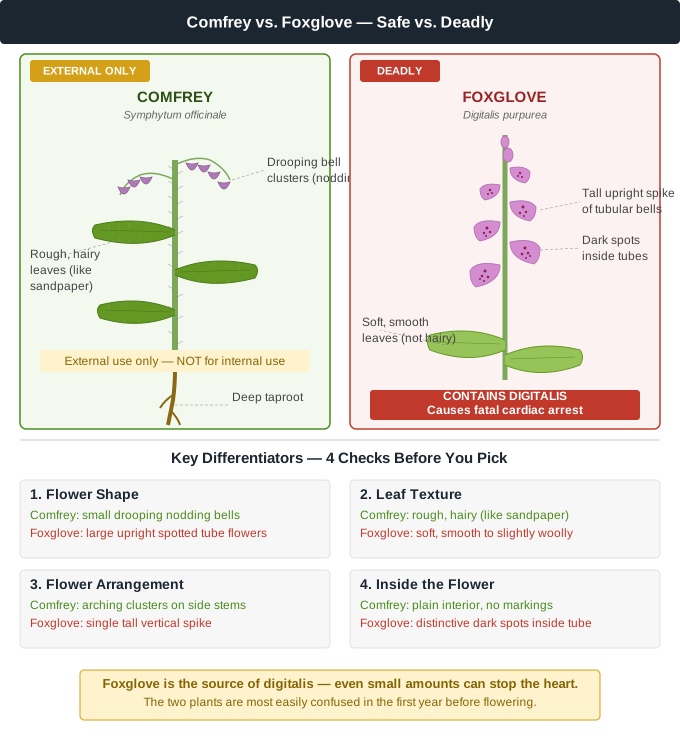
Diagram for reference only
This illustration shows key identification features but cannot substitute for hands-on botanical training. Confirm identification using multiple features simultaneously (stem texture, smell, habitat, leaf structure). When uncertain, do not use.
The definitive check is leaf texture: comfrey leaves feel rough like sandpaper due to stiff hairs covering both surfaces, while foxglove leaves are soft and smooth on top with slight wooliness underneath. Once flowering begins, the plants are unmistakable — comfrey produces small nodding bell clusters on arching side stems, while foxglove sends up a single tall dramatic spike of large tubular flowers with distinctive dark spots inside each tube.
Red flags — when herbal use must stop immediately
These signs indicate a potentially serious reaction that requires stopping all herbs and seeking evaluation. Do not wait for the symptoms to worsen before acting.
- Jaundice (yellow tinge to skin or whites of eyes): stop all herbs immediately. Jaundice indicates hepatic involvement — possible hepatotoxicity from comfrey, kava, chaparral, or other hepatotoxic herbs, or from an herb-drug interaction affecting liver metabolism. This is a medical emergency.
- Unusual bruising or prolonged bleeding from minor cuts: suggests excessive anticoagulant or antiplatelet effect from herbs such as ginkgo, garlic, ginger, or chamomile. Particularly dangerous if combined with anticoagulant medications. Stop the herb; do not resume without medical clearance.
- Allergic reaction signs: generalized hives or urticaria, facial or throat swelling, difficulty swallowing, wheezing, or a feeling of throat tightening. Stop the herb immediately. Throat tightening and difficulty breathing are anaphylaxis — treat with epinephrine if available (see home medical kit). Many herbal hypersensitivity reactions cross-react: ragweed-allergic individuals often react to chamomile, echinacea, and related Asteraceae family herbs.
- New rash appearing where a topical herb preparation was applied: indicates contact dermatitis. Discontinue the preparation. Do not continue applying the herb hoping the rash resolves — repeated allergen exposure can escalate sensitivity.
- Rapid worsening of the original condition: if a symptom you are managing with an herb is getting worse rather than better after 48-72 hours, the herb is not working and further delay in seeking other care is the primary risk.
Practical safety checklist
- Review the drug interaction table before using any herb in this list alongside prescription medications
- Check every household member's medication list against the interaction table — interactions affect all family members, not just the one using the herb
- Separate herbs clearly from look-alikes in storage; label with common name, Latin name, plant part, and harvest or purchase date
- Run the five-point quality check before using any stored herb that has been on the shelf for more than 12 months
- Keep comfrey, pennyroyal oil, raw elderberries, and ephedra out of any internally used herbal preparation — mark these containers with a clear "EXTERNAL ONLY" or "DO NOT INGEST" label
- If pregnant or planning pregnancy, apply the pregnancy contraindication list before adding any herb to your routine
- When calculating a child's dose, start at 25% of the Clark's calculated dose, not 100%, and observe for 30 minutes before proceeding
Herbal medicine earns its place in a preparedness kit through careful selection, accurate identification, and knowledge of its limits. The same properties that give an herb therapeutic value can harm when conditions change — a new medication, a pregnancy, a child's lower body weight. The pages on herbalism fundamentals and building a home medical kit provide the broader context for how herbal preparations fit within a complete medical strategy. Before making any preparation, review the herbal preparation methods page for safe ratios and the handling rules that reduce exposure risk during processing.