Energy
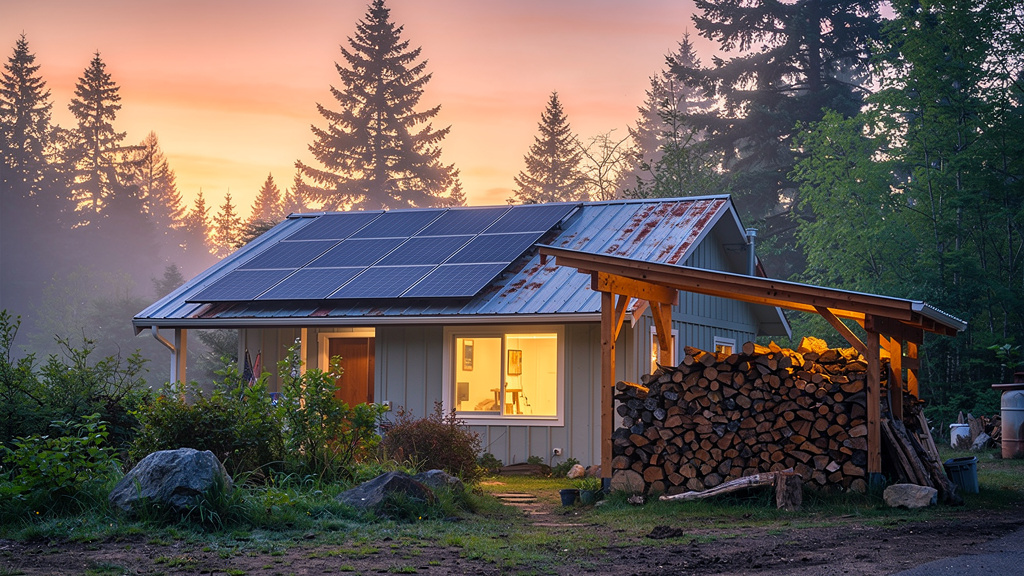
Electricity runs your refrigerator, your well pump, your furnace blower, your phone, and your medical devices. When the grid drops, all of them stop simultaneously. Extended outages lasting days to weeks occur every winter and hurricane season. Your energy plan has three layers: survive the outage, sustain critical loads, and achieve independence from the utility entirely. The pages below build that system from the ground up.
Start here: reduce demand first
The cheapest kilowatt-hour is the one you never use. Before sizing any generation system, cut what you consume. Energy efficiency covers phantom loads, LED upgrades, and the audit process that turns your daily watt-hour number into an actionable target. Insulation and heating addresses R-value targets by climate zone and air sealing — reducing heating load is the single highest-leverage intervention in cold climates. Passive solar design explains south glazing ratios, thermal mass sizing, and overhang geometry that harvests the sun without any panels or wiring.
Field note
Label every breaker in your electrical panel with what it actually controls — not "bedroom 2" but "bedroom 2 outlets + hallway smoke detector." During an outage, knowing which breakers to kill reduces phantom load and extends generator or battery runtime significantly.
Generate power
Solar basics covers panel types, STC ratings, and peak sun hours — the foundation before buying anything. DIY solar walks through the full installation sequence: load calculation, wiring, National Electrical Code (NEC) 690 compliance, and combiner boxes. Off-grid solar addresses whole-system architecture, autonomy sizing, and realistic cost ranges for different household scales. On properties with moving water, micro-hydro produces power 24 hours a day regardless of weather — even a modest stream can sustain continuous output that solar cannot match on overcast days.
Wind covers site assessment, tower height tradeoffs, and turbine sizing for exposed locations. Biogas covers anaerobic digestion, digester designs, and H2S safety for those processing organic waste into burnable fuel. For fuel-dependent backup, generators covers sizing, transfer switches, maintenance, and CO safety.
Generator exhaust kills
Carbon monoxide from generators is odorless and lethal. Never run a generator indoors, in a garage, or within 20 feet (6 m) of any window, door, or vent. More people die from generator CO poisoning during winter storms than from the cold itself.
Store and distribute
Batteries covers the four main chemistries — LiFePO4, NMC, AGM, and flooded lead-acid — with a sizing method that walks from load audit through depth-of-discharge to final amp-hour spec. Inverters addresses pure sine vs. modified sine tradeoffs, sizing for surge loads, and wiring safety. Portable power stations covers capacity classes and use cases for apartment dwellers and short-term outages. Home battery systems covers whole-home storage sizing, installation, and available tax credits.
Thermal energy
Heat is often the most critical energy need and the easiest to decarbonize. Wood heat covers stove types, clearances, and creosote prevention. Firewood breaks down BTU output by species, cord sizing, seasoning timelines, and covered storage geometry. Rocket stoves explains the combustion geometry that makes them fuel-efficient and the rocket mass heater extension that stores heat in a thermal bench.
Logistics
Fuel storage covers shelf life for gasoline, diesel, and propane; container choices; and safe rotation schedules. At half load, a typical 3,500-watt generator burns about 0.5 gallons (1.9 L) per hour — your fuel reserve sets your runtime ceiling. Manual power covers human power output benchmarks, bicycle generator builds, and hand pump options for when no fuel is available.
Where to start
- Inventory your critical electrical loads: list every device that must stay running and its wattage
- Label every breaker in your electrical panel with what it actually powers
- Acquire a portable power station rated 500 Wh or higher — a moderate investment — paired with a folding 100-watt solar panel
- Calculate your daily essential watt-hours: watts × hours of daily use, summed across all critical devices
- Once demand is known, choose between generators and solar — the math becomes straightforward