Water Distillation
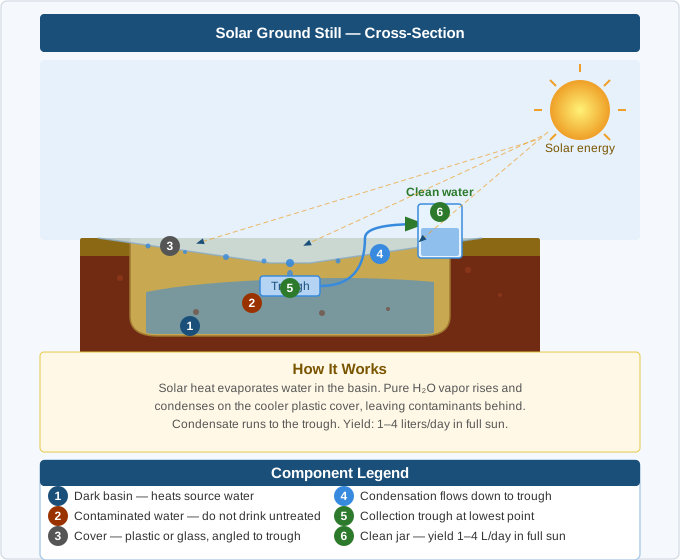
Distillation is the only widely accessible water treatment method that removes dissolved inorganic contaminants: heavy metals like lead and arsenic, salts, fluoride, nitrates, and most dissolved chemicals. Every other method — boiling, filtration, chemical treatment, UV — addresses biological threats but leaves the dissolved mineral and chemical content of water largely unchanged. Distillation changes that by vaporizing pure water, condensing the steam in a separate container, and leaving the contaminants behind in the boiling pot.
The physics are simple. Water boils at 212°F (100°C) at sea level. Most inorganic contaminants — heavy metals, salts, minerals, nitrates — have boiling points thousands of degrees higher. When water turns to steam, it separates from these dissolved substances. The steam is then cooled back into liquid in a clean container, yielding water that is chemically far purer than the source.
Distillation is not needed for every water situation. For biological threats only, Boiling, Chemical Treatment, or UV Treatment are more fuel-efficient. Distillation is the right tool when:
- Source water may contain heavy metals (lead pipes, mining runoff, industrial contamination)
- Nitrate contamination is suspected (agricultural areas, near feedlots)
- Fluoride removal is desired (standard filters do not remove it reliably)
- Seawater or brackish water must be made drinkable
- Chemical contamination from flooding or industrial spills is possible
- No other safe water source is available and you need certainty
What Distillation Removes — and What It Does Not
Effectively removed: - All biological contaminants: bacteria, viruses, protozoa, algae - Heavy metals: lead, arsenic, mercury, cadmium, chromium, copper - Dissolved salts (sodium chloride, calcium, magnesium, etc.) - Fluoride and nitrates (both resist most filtration methods) - Most dissolved inorganic chemicals - Turbidity and sediment
Not effectively removed — requires modification: - Volatile organic compounds (VOCs): Benzene, chloroform, some pesticides, and industrial solvents have boiling points near or below water. They vaporize along with the steam and arrive in the distillate. The standard mitigation is the first-fraction discard (see procedure below) and activated carbon post-filtration. - Some light gases: Hydrogen sulfide and radon (which occur naturally in some well water) are volatile and not removed by basic distillation.
DIY Pot-Still Construction
A functional distillation apparatus can be built from hardware-store materials for $30–$100. The basic design: a boiling pot, a condenser coil through which steam travels, a cold-water bath to cool the coil, and a collection container.
Materials list:
| Component | Specification | Cost |
|---|---|---|
| Boiling pot | Stainless steel, 4–8 qt (4–8 L), with lid | Affordable |
| Copper or stainless tubing | 1/4 in (6 mm) OD, 10–15 ft (3–4.5 m) length | Affordable |
| Tubing bender or dowel | For coiling the tubing | Already owned / inexpensive |
| Drill and 1/4 in bit | To drill through pot lid | Already owned |
| Food-grade epoxy or plumber's sealant | Watertight seal at lid penetration | Inexpensive |
| Cooling container | Large bucket, cooler, or second pot | Already owned |
| Collection container | Clean glass jar or stainless vessel | Already owned |
| Thermometer (optional) | Candy or digital probe, 32–250°F (0–120°C) | Inexpensive |
Total materials cost: $30–$100
Commercial countertop distillers ($150–$400, brands including Megahome, H2O Labs, Pure Water) are available for households wanting a manufactured unit with consistent output and NSF certification. They produce 0.8–1 gallon (3–4 L) per cycle and consume approximately 700–1,000 watts. In grid-down conditions, a DIY pot-still on a wood stove or camp stove requires no electricity.
Construction Steps
Step 1 — Coil the copper tubing.
Coil the 10–15 ft (3–4.5 m) length of tubing into a tight spiral with a diameter of 4–6 inches (10–15 cm). Use a PVC pipe, wooden dowel, or even a coffee can as a winding mandrel. Make the coil diameter small enough to fit inside your cooling container with room for water around it. Leave 6 inches (15 cm) of straight tubing extending from both the inlet (top of coil) and outlet (bottom of coil) ends.
Step 2 — Drill the lid.
Drill a 1/4-inch (6 mm) hole through the pot lid, centered. This is where the steam outlet will penetrate. File or sand any burrs smooth.
Step 3 — Install the steam outlet fitting.
Insert the straight inlet end of the coil through the hole in the lid from below (inside the pot). Apply food-grade epoxy or plumber's sealant around the tubing where it penetrates the lid, both top and bottom. Allow to fully cure (24 hours minimum) before using. The seal must be watertight — any steam escaping at the lid connection reduces output and creates a burn hazard.
Step 4 — Set up the cooling bath.
Place the coil inside your cooling container. The coil outlet should extend from the bottom of the cooling container to your collection vessel. Fill the cooling container with cold water. Ice significantly improves condensation rate — add ice in warm conditions or when distilling large batches.
Step 5 — Test for leaks with plain water.
Before treating any contaminated source, run a test batch with clean water. Verify: no steam escaping at the lid seal, no coil leaks, distillate flows freely from the outlet. If the lid seal leaks steam, allow the pot to cool completely, reseal, and cure again before retesting.
Step-by-Step Distillation Procedure
Setup and materials for each batch
- Assembled pot-still with cooling bath
- Source water (pre-filtered of large sediment if turbid)
- Cooling water or ice
- Clean collection vessel (glass preferred; stainless acceptable)
- Timer
Procedure
Step 1 — Fill the boiling pot to 2/3 capacity. Do not overfill. Boiling water that enters the tubing directly (rather than steam) is dangerous — it can cause steam spikes and send contaminated water into your distillate. For a 4-quart (4 L) pot, fill to approximately 2.5–3 quarts (2.5–3 L).
Step 2 — Secure the lid. Ensure the lid-to-pot seal is tight. The steam outlet tubing should connect cleanly to the coil inlet.
Step 3 — Start the heat source. Apply heat at medium-high. A camp stove on a 1 lb (450 g) propane canister brings 2 quarts (2 L) to a boil in approximately 10–12 minutes. A wood stove or rocket stove can accomplish the same with appropriate airflow adjustment.
Step 4 — Discard the first 50 mL of distillate.
This is the most important safety step in distillation. Volatile organic compounds (VOCs) — substances with boiling points at or below water — concentrate in the initial distillate fraction. Benzene, chloroform, some solvents, and other VOCs will be present in the first output at higher concentrations than in the source water. Discard a minimum of 50 mL (approximately 3 tablespoons) from the start of each batch before beginning collection. For source water with known or suspected VOC contamination, discard the first 100–150 mL.
Step 5 — Collect the middle fraction.
After discarding the first 50 mL, collect distillate into your clean collection vessel. Maintain steady heat. Output rate from a DIY pot-still on a camp stove is approximately 0.5–1 liter (1–2 pints) per hour. This is roughly 2–3 times slower than a commercial countertop unit.
Step 6 — Stop before the pot runs dry.
When approximately 10–15% of the original water volume remains in the pot — roughly 1/2 cup (120 mL) in a 3-cup starting volume — stop distilling. Boiling concentrated residue at the end of a batch can cause non-volatile contaminants to splatter into the tubing if the liquid level drops below the tubing inlet. The final concentrated liquid in the pot contains the bulk of removed contaminants; discard it and do not re-distill.
Step 7 — Allow the pot to cool before opening.
Do not open the pot lid while the system is under heat. Allow 5–10 minutes after removing from heat before opening to clean or inspect.
Step 8 — Aerate the distillate.
Distilled water tastes flat because it has no dissolved minerals and has been depleted of dissolved oxygen. Pour the distillate between two containers 5–10 times to re-oxygenate. The taste will noticeably improve.
Step 9 — Optional remineralization.
For water used as a primary drinking source over multiple days or weeks, consider adding a small amount of minerals back. Options: - 1/8 teaspoon (0.6 g) of non-iodized sea salt per gallon (3.8 L) — adds sodium, chloride, and trace minerals - Commercial electrolyte mineral drops (follow product dosing) - A small clean rock or piece of coral left in the storage container
Long-term consumption of demineralized water is not definitively harmful at the quantities an average adult consumes, but some research suggests mineral intake from water contributes to cardiovascular health and overall mineral balance. For short-term emergency use, remineralization is optional. For extended off-grid use, it is a reasonable precaution.
Field Note
In a flood or contamination event where you are uncertain about what chemicals are in your water, activated carbon post-filtration of distillate catches the VOCs that distillation alone misses. Pour distilled water through an activated carbon cartridge or a commercial carbon pitcher filter before drinking. The combination — distillation + activated carbon — addresses biological, inorganic chemical, heavy metal, salt, and volatile organic threats simultaneously. This is the most thorough treatment chain available without laboratory equipment. Cost for both: $30–$100 DIY still + $5–$15 carbon cartridge.
Fuel and Time Requirements
Distillation is energy-intensive. Planning realistic fuel and time budgets prevents surprises:
| Heat Source | Time to Produce 1 Liter | Fuel per Liter |
|---|---|---|
| Propane/isobutane camp stove | ~60–90 minutes | ~1 oz / 28 g gas |
| Wood fire (efficient stove) | ~75–90 minutes | ~6 oz / 170 g dry wood |
| Electric countertop unit | ~45–60 minutes | ~0.8–1.0 kWh |
| Natural gas range | ~60–75 minutes | ~0.1 cu ft / 2.8 L gas |
A family of four drinking 2 liters per person per day needs 8 liters of distilled water daily. On a propane stove, that requires 8 oz (227 g) of propane per day for water alone — a standard 1 lb (453 g) canister lasts less than 2 days for drinking water only. Plan fuel storage accordingly using guidance from Energy — Fuel Storage.
Distillation is fuel-expensive enough that most preparedness plans use it selectively: for chemical or heavy-metal-contaminated source water, or as a method for seawater/brackish water. For biologically contaminated but chemically clean water (most natural surface water scenarios), Boiling is more fuel-efficient.
Distillation vs. Other Methods: When to Choose Each
| Scenario | Best Method |
|---|---|
| Stream/river water, biological threat only | Boiling or filtration + chemical treatment |
| Well water with suspected lead or nitrates | Distillation |
| Flood water from agricultural area | Distillation + activated carbon |
| Seawater or brackish water | Distillation (only reliable option) |
| Municipal water during boil-water advisory | Boiling (chemicals already removed by utility) |
| Fluoride removal | Distillation (filters do not reliably remove fluoride) |
| Rapid treatment needed, clear water | UV treatment (SteriPen) |
| No fuel, clear water, sunny weather | SODIS (UV treatment) |
Safety and Maintenance
Burn hazard: A pressurized pot with a blocked outlet can build pressure and explode. Always ensure the coil outlet is clear and unobstructed before heating. Never plug or crimp the outlet end. If you smell unusual odors or notice the pot lid lifting from pressure, remove from heat immediately and do not open until fully cooled.
Lead solder: If using older copper tubing or fittings, confirm they are lead-free. Modern copper plumbing fittings and tubing sold in the U.S. since 2014 are required to be low-lead. If uncertain about older materials, use stainless steel tubing instead.
Coil cleaning: After each batch, flush the coil with fresh clean water. Monthly, fill the coil with a dilute vinegar solution (1 part white vinegar : 3 parts water), let soak for 30 minutes, then flush with clean water. This removes mineral scale that builds up on the inner walls and can eventually restrict flow.
Pot residue: The residue left in the pot after distillation contains concentrated contaminants. Do not use this liquid. Dispose of it away from food garden areas if it contained heavy metals or chemical contamination.
For sanitation in extended shelter scenarios, see Shelter Sanitation. For waterborne illness symptoms and management, see Medical — Infection.
Field Checklist
- Source water assessed — distillation justified (chemical, metal, salt, or unknown contamination)
- Pot-still assembled and leak-tested before treating contaminated water
- Boiling pot filled to 2/3 capacity maximum
- Lid seal tight; coil outlet clear and unobstructed
- First 50 mL of distillate discarded before collection begins
- Collection stopped with 10–15% source volume remaining in pot
- Pot allowed to cool before opening
- Distillate aerated by pouring between containers
- Activated carbon post-filtration applied if VOC contamination suspected
- Pot residue disposed of safely away from food production areas
- Fuel inventory updated; plan for 1–1.5 hours and ~1 oz propane per liter produced