Chemical Water Treatment
Chemical disinfection is the most portable, lowest-cost emergency water treatment method available. An inexpensive bottle of household bleach can treat hundreds of gallons of water, fits in a pocket, and requires no fuel or equipment beyond a measuring dropper. When applied correctly at EPA-recommended doses, sodium hypochlorite bleach kills bacteria, viruses, and most protozoa. It is the U.S. government's first-line recommendation for emergency water treatment in disaster scenarios.
The critical word is correctly. Chemical treatment has specific dose requirements, contact times, turbidity limitations, and shelf-life constraints that many people get wrong. This page covers the exact procedures for three chemical treatment options: household bleach (sodium hypochlorite), calcium hypochlorite pool shock, and iodine tablets.
What chemical treatment does not do: it does not reliably kill Cryptosporidium at standard doses (this protozoan requires very high chlorine concentrations or UV treatment). It does not remove heavy metals, fluoride, or dissolved chemicals. For complete purification, combine chemical treatment with Filtration when Cryptosporidium is a risk, and with Distillation when chemical or metal contamination is present.
Method 1: Household Bleach (Sodium Hypochlorite)
Use this product: Unscented liquid bleach at 6–8.25% sodium hypochlorite concentration. This is the standard concentration of most grocery-store bleach brands (Clorox Regular, store brands). Do not use: - Scented bleach (added fragrances are toxic when ingested) - Color-safe or splash-less bleach (different chemical composition) - Concentrated bleach above 8.25% without recalculating the dose - Any bleach with added cleaners, surfactants, or thickeners
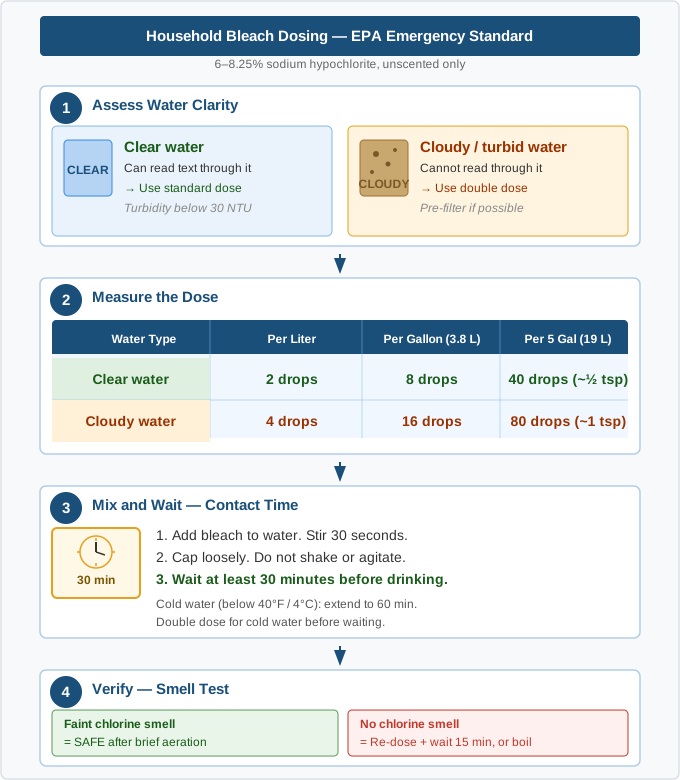
EPA Emergency Dosage Table (household bleach, 6–8.25%):
| Water Clarity | Dose per Gallon (3.8 L) | Dose per Liter | Dose per Quart |
|---|---|---|---|
| Clear water | 8 drops | 2 drops | 2 drops |
| Cloudy/turbid water | 16 drops | 4 drops | 4 drops |
1 drop ≈ 0.05 mL from a standard medicine dropper. A "teaspoon" has ~100 drops.
Exact procedure for 1 gallon (3.8 L) of clear water:
-
Pre-filter turbid water first. If water is visibly cloudy, strain it through cloth, allow it to settle for 30 minutes, and ladle the clearer top portion. Use the doubled dose (16 drops/gallon) for any water that is not crystal clear.
-
Measure the dose. Using a clean medicine dropper or eyedropper, count out 8 drops of bleach for clear water. Do not guess or pour from the bottle directly — overdosing does not improve safety and makes the water taste strongly of chlorine.
-
Add to the container. Add the bleach to the water, not the other way around. Stir thoroughly for 30 seconds with a clean implement.
-
Replace the cap loosely. Allow the treated water to sit with the cap slightly loose for 30 minutes. The chlorine needs contact time to disinfect. Do not shake or agitate during this period.
-
Smell test at 30 minutes. After 30 minutes, smell the water near the opening. It should have a faint but detectable chlorine odor. If you smell no chlorine:
- The water may have had high organic content that consumed the chlorine
- Repeat the dose (add another 8 drops for clear, or 16 drops for cloudy)
- Wait another 15 minutes
-
Smell again. If still no chlorine smell, the water has too high an organic load for chemical treatment alone — use Boiling or Distillation
-
Aerate to reduce taste. Pour the treated water back and forth between two clean containers 5–10 times after the 30-minute wait. This drives off residual chlorine and significantly improves palatability.
-
Use within 24 hours. Chlorine dissipates over time. Treated water is not indefinitely safe — use within 24 hours or retreat.
Cryptosporidium is chlorine-resistant
Standard bleach doses do not reliably kill Cryptosporidium parvum at the contact times achievable in field conditions. Cryptosporidium requires either boiling (100% effective), UV treatment at an appropriate dose, or very high chlorine concentrations held for hours. If your source is known or suspected to contain Cryptosporidium (common in surface water, especially post-flood), filter first through a 0.2-micron ceramic or 0.1-micron hollow-fiber filter, then apply chemical treatment. See Filtration.
Method 2: Calcium Hypochlorite (Pool Shock)
Liquid bleach degrades in storage. Calcium hypochlorite pool shock granules, by contrast, can be stored for 5–10 years with minimal potency loss when kept cool and dry. A single inexpensive 1-lb (450 g) bag of 68–78% calcium hypochlorite can treat approximately 10,000 gallons (37,850 L) of water. This makes it the highest-value emergency water treatment option for long-term storage.
Required product: Calcium hypochlorite at 68–78% concentration. Available at pool supply stores as "pool shock" or "granular chlorine." Do not use trichlor or dichlor tablets (different compounds, wrong ratios, toxic residues).
Making a stock solution first (required — do not add granules directly to drinking water):
- Dissolve 1/8 teaspoon (0.6 g) of calcium hypochlorite granules in 1 gallon (3.8 L) of water. This creates a concentrated "bleach stock solution" of approximately 500 ppm available chlorine.
- Wait for any undissolved particles to settle. Ladle only the clear solution from the top.
- Discard the stock solution after 24 hours — it degrades quickly.
Treating drinking water with stock solution:
| Water Clarity | Stock Solution per Gallon (3.8 L) | Stock per Liter |
|---|---|---|
| Clear water | 1/8 teaspoon (0.6 mL) | 1/32 teaspoon |
| Cloudy/turbid water | 1/4 teaspoon (1.2 mL) | 1/16 teaspoon |
After adding stock solution: stir, wait 30 minutes, smell-test for chlorine, aerate, and use within 24 hours — same procedure as for liquid bleach.
Storage of calcium hypochlorite: Store in a cool, dark location in a tightly sealed original container. Keep away from organic material, flammables, and metals — calcium hypochlorite is an oxidizer that can cause fires if it contacts organic matter while damp. Never store near fuel, wood, or food. A properly stored supply lasts 5–10 years.
Field Note
Carry a small 4 oz (120 mL) dropper bottle pre-filled with a diluted bleach stock solution (5 drops of 6% bleach in 4 oz water). This is essentially a ready-to-use 200 ppm solution that can treat approximately 200 gallons (750 L) of clear water, fits in any pocket, and lasts about a week before the stock weakens. Label it clearly and replace weekly during active use. This approach is far more practical than carrying a bleach jug into the field. Store the granular calcium hypochlorite at your base location.
Method 3: Iodine Tablets
What they treat: Bacteria, viruses, Giardia What they do not treat: Cryptosporidium (iodine is ineffective), chemical contamination Cost range: Inexpensive for 50 tablets (treats 50 liters)
Iodine tablets (tetraglycine hydroperiodide) are compact, lightweight, and widely available. They are a reasonable backup option for short-duration emergency use in adults without contraindications.
Dosage and procedure:
- Pre-filter turbid water through cloth if needed
- Add 2 tablets per 1 liter (1 quart) of water. For turbid water or cold water (below 40°F / 4°C), increase to 4 tablets per liter.
- Replace cap on water bottle loosely and wait 30 minutes for clear warm water. In cold water (below 60°F / 15°C), extend contact time to 60 minutes.
- The distinctive iodine taste can be reduced by adding vitamin C (ascorbic acid) powder after the contact period — but not before, as ascorbic acid neutralizes iodine and destroys effectiveness.
Contraindications — iodine is not appropriate for: - Pregnant women (iodine can affect fetal thyroid development) - People with thyroid disorders or iodine sensitivity - Long-term use beyond 2–3 weeks (iodine accumulates in the thyroid) - Infants
For these populations, use boiling or calcium hypochlorite bleach instead.
Bleach Shelf Life and Potency
This is where most emergency water treatment plans fail in practice. Bleach degrades.
Sodium hypochlorite degradation rates:
| Storage Duration | Approximate Remaining Potency (6% bleach) |
|---|---|
| New (purchased fresh) | 6–8.25% |
| 6 months | ~5.5% (retain full EPA dose) |
| 1 year | ~4.8% (increase dose by 25–30%) |
| 2 years | ~3.5% (increase dose by 50–75%; effectiveness unreliable) |
Bleach stored in warm conditions (above 77°F / 25°C) or exposed to light degrades faster than stated above. Old bleach that smells only faintly of chlorine or not at all has lost significant potency.
Practical rule: Rotate household bleach every 6 months in your emergency supply. Buy new, use old for cleaning. Write the purchase date on the bottle in permanent marker. Never rely on bleach that is more than 12 months old for water treatment without doubling the dose and verifying the smell test.
Calcium hypochlorite pool shock does not have this problem — it retains potency for 5–10 years when stored correctly. For any preparedness scenario longer than 6 months, pool shock is the superior choice.
Dosing for Different Container Sizes
The EPA 8-drops-per-gallon guideline applies to clear water. Here is a practical expanded table:
| Container Volume | Clear Water Dose (6–8.25% bleach) | Turbid Water Dose |
|---|---|---|
| 1 liter (1 qt) | 2 drops | 4 drops |
| 1 gallon (3.8 L) | 8 drops | 16 drops |
| 5 gallons (19 L) | 40 drops (~1/2 tsp) | 80 drops (~1 tsp) |
| 55 gallons (208 L) | 3 teaspoons (15 mL) | 6 teaspoons (30 mL) |
For large containers like 55-gallon drums, measure bleach by teaspoon rather than drops to reduce counting errors.
When Chemical Treatment Is Not Enough
Chemical treatment fails or is insufficient in these scenarios — escalate to boiling or distillation:
- No chlorine smell after 30 minutes and second dose: Organic load too high; water is not treatable by chemical means alone
- Suspected chemical contamination: Bleach does not remove pesticides, heavy metals, or industrial chemicals; use Distillation
- Flood water from agricultural or industrial areas: Multiple contamination types present
- Cryptosporidium risk: Pre-filter to 0.2 microns and follow with Boiling
- Population with iodine contraindications: Use bleach (no age/pregnancy restrictions at standard doses) or Boiling
Waterborne illness is one of the most preventable emergencies. See Medical — Dehydration for recognizing dehydration from diarrheal illness, and Medical — Infection for managing suspected waterborne infection without hospital access. Store your water treatment supplies alongside your Bug-Out Bag and shelter sanitation materials.
Quick-Reference Card
| Chemical | Product | Clear Water Dose | Turbid Dose |
|---|---|---|---|
| Sodium hypochlorite (bleach) | 6–8.25% unscented | 8 drops/gal (2 drops/L) | 16 drops/gal (4 drops/L) |
| Calcium hypochlorite | Pool shock 68–78% | 1/8 tsp stock solution/gal | 1/4 tsp stock solution/gal |
| Iodine tablets | Tetraglycine HI | 2 tablets/L | 4 tablets/L |
| Chemical | Contact Time | Shelf Life |
|---|---|---|
| Sodium hypochlorite (bleach) | 30 min | 6–12 months |
| Calcium hypochlorite | 30 min | 5–10 years |
| Iodine tablets | 30–60 min | 4 years sealed |
Field Checklist
- Bleach confirmed: unscented, 6–8.25% sodium hypochlorite, purchased within last 6–12 months
- Turbid water pre-filtered before treatment
- Correct dose measured (not poured freehand from bottle)
- 30-minute contact time observed before use
- Chlorine smell verified at 30 minutes
- Second dose applied if no smell detected; escalated to boiling if second dose also fails smell test
- Water aerated before drinking to reduce chlorine taste
- Treated water used within 24 hours or retreated
- Calcium hypochlorite stock solution discarded after 24 hours
- Iodine not given to pregnant women, thyroid patients, or infants