Mobility
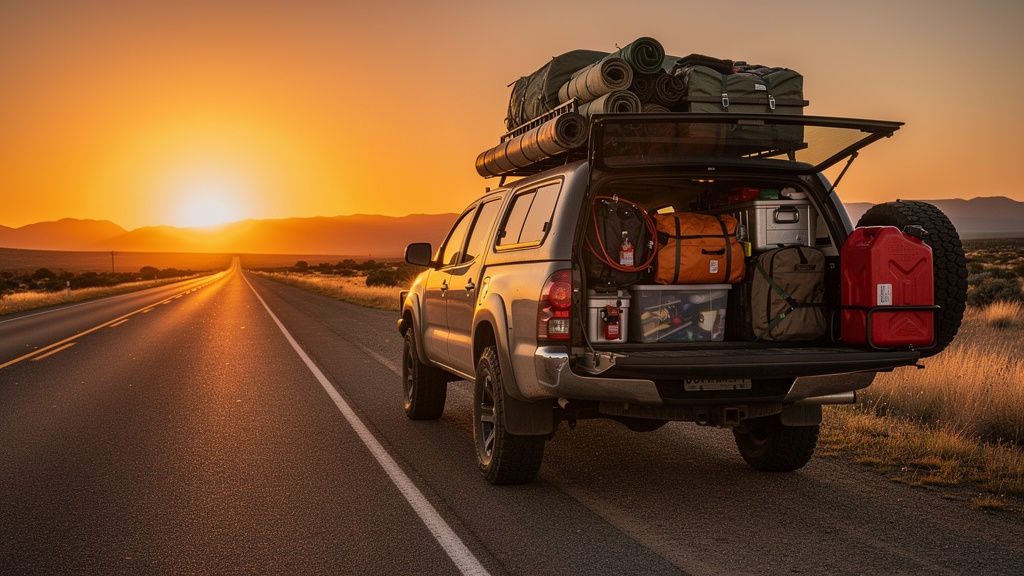
Most emergencies are best survived at home. But wildfires, floods, chemical spills, and civil unrest can make staying a worse option than leaving. When the decision to move comes, it comes fast — often with hours of warning, sometimes minutes. The households that move efficiently have three things in place before the crisis: a reliable vehicle with fuel, pre-planned routes with alternatives, and the ability to move without a vehicle if roads fail.
Vehicle readiness
Your daily driver is your primary mobility asset. A well-maintained vehicle with a full tank of gas is worth more than a purpose-built bug-out truck sitting on bald tires. Vehicle selection matters — 4WD capability, ground clearance, cargo space, and fuel efficiency each trade off against each other — but maintenance matters more.
Keep up with oil changes, tire condition, brake pads, battery health, coolant, and belt condition. A vehicle that won't start when you need to evacuate is worse than no vehicle at all. The vehicle maintenance page covers the full kit and service schedule: jumper cables or a compact jump starter, a tire inflator, basic tools, a first aid kit, 1 gallon (3.8 liters) of water, food bars, a blanket, and a paper map of your region. If your mobility plan needs to account for passengers with disabilities or medical equipment, disabled access covers adaptive load strategies and vehicle modifications.
Field note
The half-tank rule is the single easiest preparedness habit to adopt. Never let your fuel gauge drop below half. It costs nothing, changes no routine, and guarantees you have 150-250 miles (240-400 km) of range at all times — enough to clear most regional emergencies.
Fuel
Gas stations need electricity to pump. During extended power outages, stations close within hours. Fuel storage extends your effective range beyond what's in the tank. A 10-gallon (38-liter) reserve of stabilized gasoline in approved containers gives a typical sedan an additional 250-350 miles (400-560 km) of range.
Gasoline degrades in 3-6 months without stabilizer. Treated with a stabilizer like Sta-Bil, it lasts 12-24 months. Diesel degrades more slowly but grows algae in warm, humid conditions. Rotate stored fuel into your vehicle's tank on a 6-month schedule and refill fresh.
Fuel storage safety
Store gasoline in approved containers only — red for gasoline, yellow for diesel, blue for kerosene. Keep containers in a ventilated space away from the house, never in a basement or attached garage. 10 gallons (38 liters) of gasoline contains the explosive energy equivalent of 14 sticks of dynamite.
Routes
An evacuation plan needs three routes out of your area using different road networks. If the interstate is gridlocked, your secondary route uses state highways. If those are flooded, your tertiary route uses back roads. Drive all three routes at least once a year so you know the actual conditions — bridges, chokepoints, fuel stops, and terrain.
Navigation without GPS is a real possibility. Cell towers and data networks fail under load during mass evacuations. Keep a current paper road atlas in every vehicle. Mark your three routes, rally points, and supply caches if you've placed them.
Timing determines whether you evacuate smoothly or sit in gridlock. The window between "officials suggest leaving" and "roads are impassable" can be as short as 2-4 hours during a hurricane or wildfire. Having a pre-packed vehicle and pre-planned route means you make one decision — go — rather than spending critical time figuring out what to grab and which direction to drive.
Alternative transport
Roads fail. Bridges wash out. Debris blocks highways. Bicycles move at 10-15 mph (16-24 km/h) on broken pavement, carry 50-80 pounds (23-36 kg) of gear on a rack, and require no fuel. A quality mountain or gravel bike — an affordable to moderate investment — with a rear rack and panniers is a serious mobility tool, not a novelty.
Foot travel is the baseline — the mode that works when everything else doesn't. A fit adult with a well-fitted pack covering 30-40 pounds (14-18 kg) can sustain 15-20 miles (24-32 km) per day on roads, less on rough terrain. Footwear matters enormously: broken-in boots with ankle support and moisture-wicking socks prevent blisters that can make you immobile within hours.
In waterway-rich areas, small boats — canoes, kayaks, inflatable craft — provide mobility when roads flood. In rural areas with livestock infrastructure, horses cover terrain that vehicles and bicycles can't.
The stay-or-go decision
The hardest mobility decision isn't how to move — it's whether to move at all. Bugging in (sheltering in place) is the right call for most emergencies. Your home has your supplies, your tools, your shelter, and your community. Bugging out means leaving all of that behind with whatever fits in your vehicle or on your back. If the situation requires a permanent move rather than a temporary evacuation, relocation covers the longer decision — when to declare a location permanently untenable and how to choose and establish a new base.
The decision framework is simple: leave if staying will kill you (fire, flood, chemical plume, structural collapse). Stay for everything else. If the answer is ambiguous, leave early — the cost of an unnecessary evacuation is a tank of gas and a night in a motel. The cost of leaving too late can be your life. For high-risk movement through contested areas, vehicle and personal armor covers the realistic protection options and their tradeoffs.
Where to start
- Adopt the half-tank rule today — never let your fuel gauge drop below half
- Check your vehicle's maintenance status: tires, oil, brakes, battery, coolant, belts
- Build a permanent vehicle kit: jump starter, tire inflator, first aid, water, blanket, paper map — an affordable total outlay
- Drive 3 evacuation routes out of your area using different road networks — note chokepoints, fuel stops, and bridge crossings
- Store 5-10 gallons (19-38 liters) of stabilized fuel in approved containers, away from the house
With your mobility plan in place, the threats Foundation helps you determine which scenarios are most likely in your region — so your routes and triggers are calibrated to the emergencies you'll actually face.