Shelter
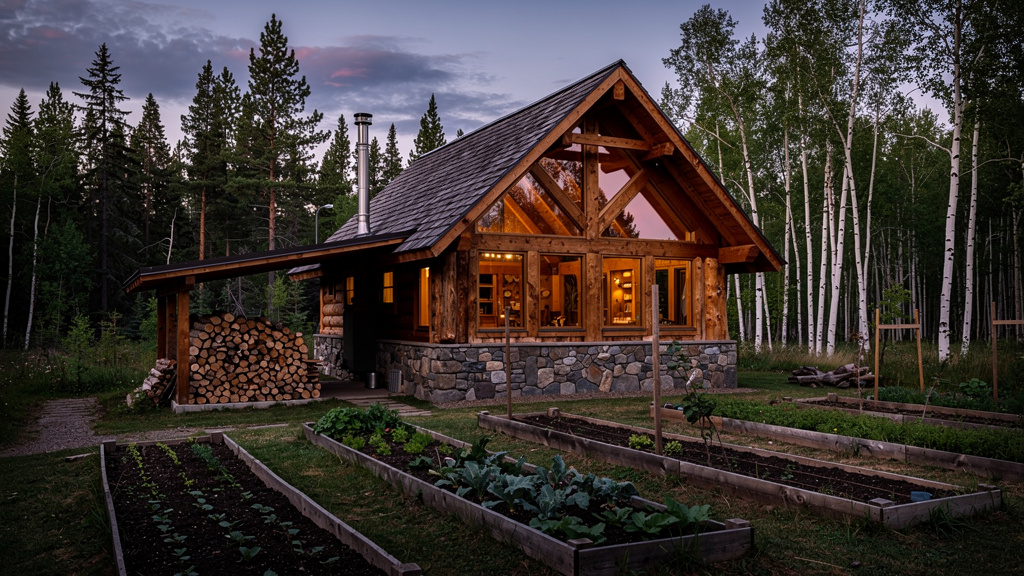
Exposure kills more people in outdoor emergencies than starvation, dehydration, or injury. In urban emergencies, the threat is subtler but equally real: a home that can't stay above 50°F (10°C) during a winter power outage becomes medically dangerous within 48 hours, especially for children, elderly, and anyone on medications that require stable body temperature.
Shelter preparedness spans three scales: emergency (surviving tonight with what's available), hardening (making your current home resilient to outages and regional threats), and building (constructing permanent structures that don't depend on the grid at all).
Emergency shelter
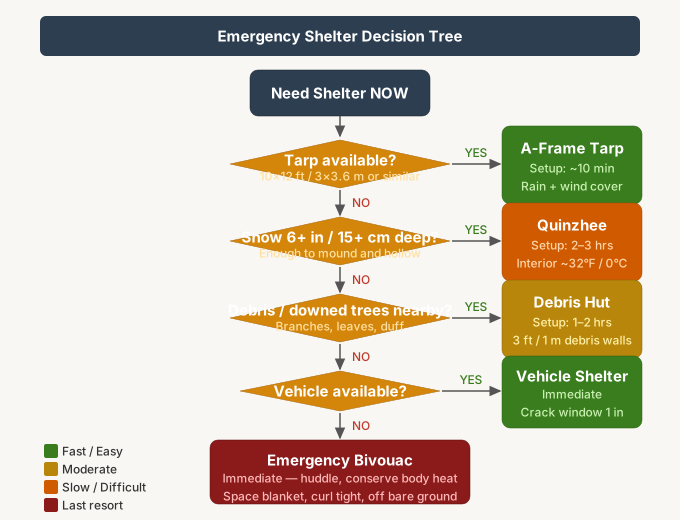
When you're caught outside without your home — stranded, evacuated, or displaced — your body loses heat to the environment faster than it produces it. A tarp shelter rigged from a 10x12 foot (3x3.6 meter) silnylon tarp and 50 feet (15 meters) of paracord provides rain and wind protection in under 10 minutes. Six configurations cover most terrain and weather: A-frame, lean-to, C-fly, diamond, plow point, and hammock tarp.
A debris shelter uses no manufactured materials at all. A properly built debris hut — framework of branches, 3 feet (1 meter) of leaf and duff insulation, a body-width interior — maintains survivable temperature in below-freezing conditions with no fire. It takes 2-4 hours to build and one practice session to learn.
Snow shelters are counterintuitively warm. A quinzhee (mounded and hollowed snow pile) maintains interior temperatures around 32°F (0°C) regardless of exterior wind chill. An igloo built from cut snow blocks is structurally superior but takes practiced skill. Both require snow depth of at least 3 feet (1 meter).
When your vehicle is your shelter — stranded on a highway, sleeping during an evacuation — survival depends on insulation, ventilation, and fuel management. Run the engine 10-15 minutes per hour for heat. Crack a downwind window 1 inch (2.5 cm) to prevent carbon monoxide buildup. A wool blanket and a candle lantern inside a car can raise interior temperature 10-15°F (5-8°C).
Hypothermia sets in before you realize it
Shivering is your body's last active defense against dropping core temperature. When shivering stops, it doesn't mean you've warmed up — it means your body has exhausted its reserves. At that point, confusion, poor coordination, and irrational behavior begin. Build or improve shelter at the first sign of sustained shivering, not after it stops.
Hardening your home
Your current home is your best shelter for 90% of emergencies. Hardening it against grid-down conditions and regional threats is higher priority than any bug-out property or alternative shelter plan.
Insulation is the highest-return investment. Designate one room as your "warm room" — the smallest room with the fewest exterior walls and windows. Add weatherstripping, seal gaps, hang heavy blankets over windows, and close it off from the rest of the house. A single room is far easier to keep warm than an entire house when your only heat source is a wood stove or kerosene heater.
Weatherproofing — caulking, door sweeps, window film, attic insulation — reduces heat loss by 20-40% in a typical older home. Most of it requires only inexpensive materials and a weekend of labor. Shelter lighting covers LED, solar lantern, and candle setups when the grid is out.
Sanitation and waste management become critical within 72 hours of a grid failure — know your options before you need them.
Regional threats require specific hardening. Storm preparation in hurricane zones means impact-rated shutters or pre-cut plywood panels for every window. Flood preparation means knowing your elevation, your sump pump's capacity, and having sandbags or flood barriers staged. Fireproofing in wildfire zones means defensible space — 30 feet (9 meters) of cleared vegetation around structures, ember-resistant vents, and non-combustible roofing.
Field note
Know how to shut off your home's water main, gas valve, and electrical panel. Label each one clearly. In an earthquake, a broken gas line and a water-flooded house turn a survivable situation into a dangerous one. Every household member old enough should know where these shutoffs are and how to operate them.
Building
When the goal shifts from surviving in your current home to building something purpose-designed, the options range from practical weekend projects to full construction.
Earthbag construction (superadobe) uses filled polypropylene bags stacked in courses with barbed wire between layers. It's fire-resistant, bullet-resistant, earthquake-tolerant, and can be built with unskilled labor. Materials cost $5–15 USD per square foot (0.09 sq m) for the structure itself.
Cob building uses a mix of clay, sand, and straw sculpted into monolithic walls with outstanding thermal mass — ideal for climates with hot days and cold nights. Timber framing uses locally harvested wood with mortise-and-tenon joinery that requires no metal fasteners.
Shipping container conversion turns a 20-foot (6-meter) or 40-foot (12-meter) steel box into habitable space. Containers are structurally sound, weather-tight, and available for $3,000–8,000 USD delivered. Tiny homes — whether on wheels or on a foundation — offer a faster and lower-cost path to off-grid living at 100–400 sq ft (9–37 sq m).
Underground shelters — from reinforced basements to purpose-built bunkers — provide protection against severe weather, fallout, and forced entry that above-ground structures can't match. A root cellar serves double duty as food storage and storm shelter. A reinforced basement with sealed ventilation, stored water, and communication equipment is the practical middle ground between a standard home and a dedicated bunker.
Where to start
- Learn to rig a tarp shelter in two configurations — practice in your backyard until you can do it in under 10 minutes in the dark
- Identify and prepare your "warm room" — the smallest interior room with the fewest exterior walls
- Weatherproof that room: add door sweep, caulk window gaps, hang insulating curtains (inexpensive materials)
- Locate and label your home's water shutoff, gas valve, and electrical panel — brief every household member
- Assemble a home repair kit: 2 tarps, 50 feet (15 meters) of paracord, duct tape, plastic sheeting, screws, a cordless drill
Once your current home is hardened and you can build emergency shelter from minimal materials, the energy Foundation addresses the next layer — keeping your shelter warm, lit, and powered when the grid can't.